You are living and every life needs food. Food takes many forms. Nourishment is necessary to function and that food enables our brains to feed us thoughts which can lead to many things. Where will you find your next meal, and when, and what can be served? Food for thought and thoughts of food provide a cycle for life. A space exists in these thoughts that requires filling.
With the holidays, short days, long nights, lower temperatures, people gathering, celebrations occurring, and conversations arising, one of many questions keeps surfacing. Why aren’t the winter birds here?
Go to any neighborhood to get some exercise with friends or your dog(s), and you will notice a sizable number of bird feeders. The feeders may be empty or have food but most of them don’t have any birds visiting. The foods and designs of the feeders vary widely, and we know that birds wake up thinking about food and where to find it. So, what’s going on when the temperature is below zero, and wildlife needs more food to burn for fuel? Why aren’t birds flocking to feeders to refuel?
People like to talk about wildlife they see in winter. Two wolves crossing the road near the International Wolf Center yesterday, a deer family feeding along a forest edge, red squirrels trying to get to a bird feeder, and a snowshoe hare camouflaged along a trailside at dusk. All the talk includes observations about birds.
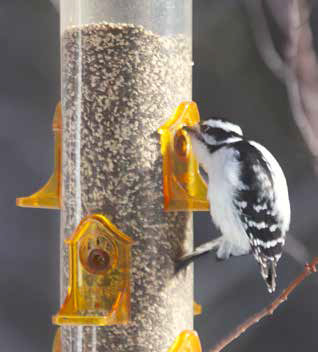
After watching fall migration and the onset of ice, snow and freezing temperatures, people agree that black-capped chickadees, common ravens, woodpeckers (hairy, downy, and pileated), rock pigeons, European starlings, Canada jays, and house sparrows are here year-round as usual. Some visit feeders regularly and are abundant in towns. White-breasted nuthatches, that are not plentiful here, come to get seeds in their neighborhoods. Birds can fly and, in general, live where the habitat and natural foods are available, and every winter, they partake of foods at feeders that suit them.
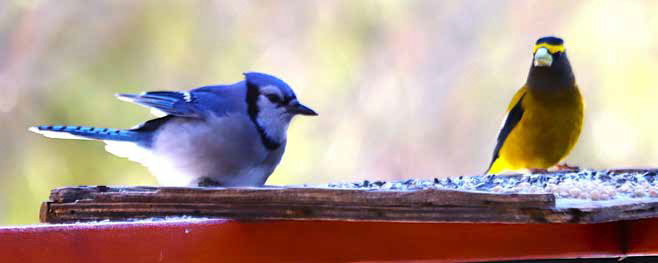
A few crows stay every winter and this year many blue jays that didn’t migrate are abundant at feeders. It is not unusual for other small birds like the recent white-throated sparrow reported staying near a feeder and shelter.
Now the biggest discussion is about the birds that migrate every winter and relocate to where natural winter foods are available. They can occur in large numbers and people expect to put out food for them or they have mountain ash, ornamental crab apples, or other trees that provide winter food. These are mostly species that feed on tree seeds and fruit. Since each year is different, observations from 2025, which was a drought with high fire danger through much of the year, suggest that trees and shrubs did generally not produce much potential food.
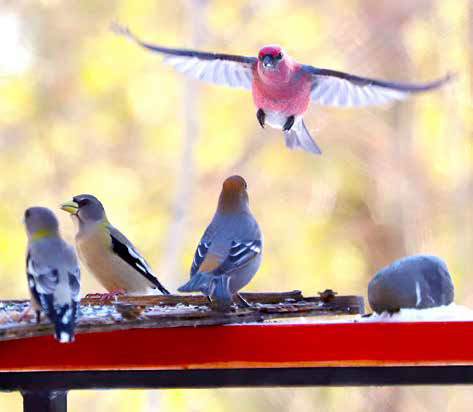
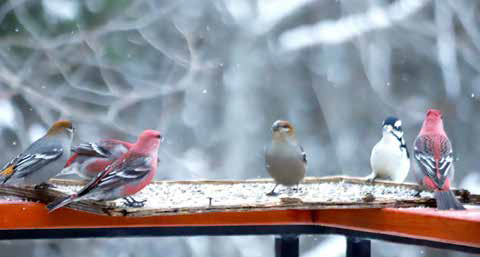
Pine grosbeaks have arrived at feeders partially due to good seed production on green ash trees in towns and black ash trees in wetland forests. Finch species that vary a lot from winter to winter are the most noticeably absent. Birch, alder, and other small seeds, which people often augment with Niger thistle and sunflower chips in finch mix, are not in the forests or needed at feeders when pine siskins, redpolls, goldfinches, and purple finches have migrated farther south or elsewhere.
Even red-breasted nuthatches, red and white-winged crossbills, and Bohemian waxwings may be challenging to find because of poor cone production on spruce, pine, and fir trees and fruit on mountain ash.
So planning requires thinking about the potential guests at this time of year. Adapting to who is here, who might come, and what they might eat becomes the challenge. There are always other birds living in the forest that provide excitement in discovery away from feeders – owls, eagles, shrikes, waterfowl, woodpeckers, grouse, etc. And even a brown creeper, robin, mourning dove or other bird may be seen in your yard or garden.
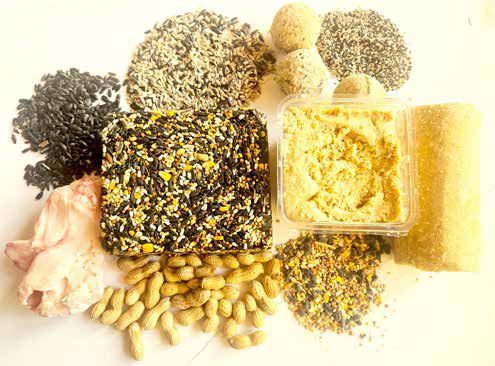
Think like a bird as you evaluate the options for feeding birds – suet, finch mixes (maybe not), heated bird bath, peanuts in a shell (for bluejays), broken sunflower seeds on open trays (large bags are more expensive than black oil sunflower, but more food for the money and not as much waste/shells), suet-seed cakes, peanut butter or bark butter spread on a tree trunk.
Experiment, keep records of what works, enjoy what you see, change and adapt as the birds do, and share/report/take part in the Ely Christmas Bird Count on Dec. 27. Call or text me at 218-2358078. Pre-Ely Christmas Bird Count Gathering - Anyone who would like to participate in the Ely CBC is welcome to meet the participants gathering the week before. Meet at Vermilion Campus in Classroom NS111 on Thursday, Dec. 18 from 4-6 p.m. to discuss who is counting, how, and where.