by Tom Coombe
The continuing saga over the distribution of lodging tax dollars took another turn this week, with wages being paid by the Ely Area Tourism Bureau becoming the latest flash point.
Twice in as many days, the issue was raised, with tourism bureau representatives first rebuffing a request by former Ely council member Paul Kess to disclose hourly wages being paid to tourism bureau contractors.
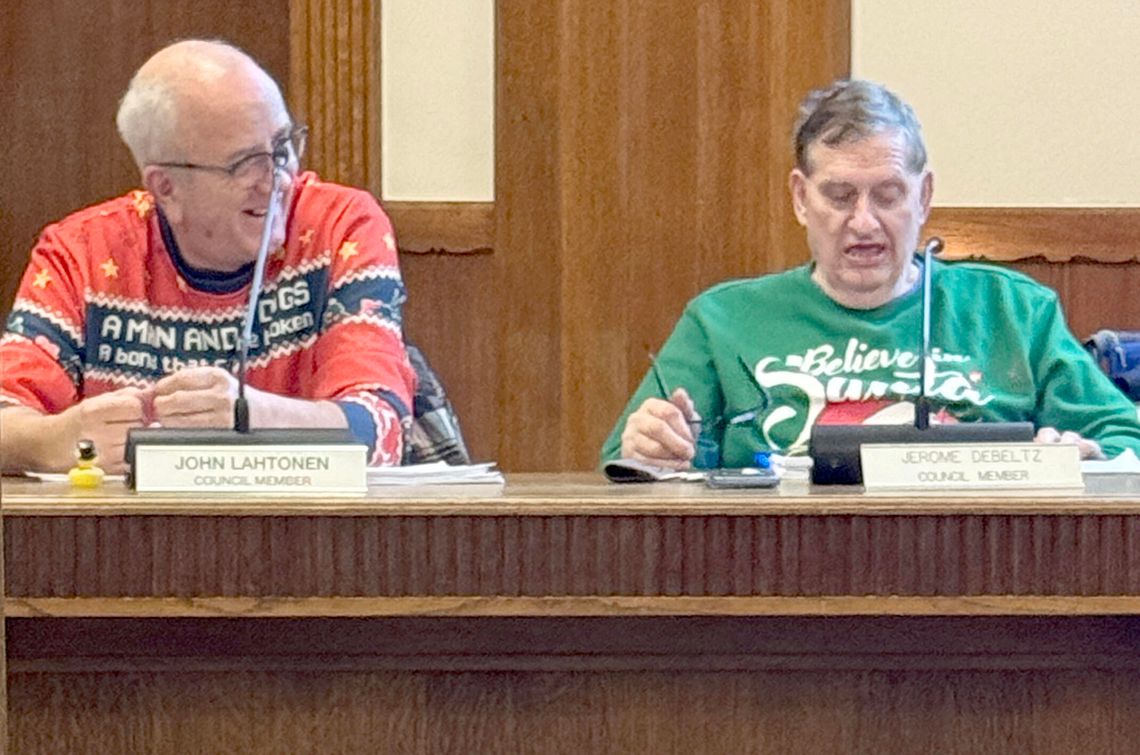
The issue was debated briefly Monday, during another contentious meeting (see related story) of the Ely Area Lodging Tax Joint Powers Board, and again during presentations Tuesday at the regular city council meeting.
Kess, who represents Ely on the joint powers board, contends there’s nothing unusual about his request, noting that lodging tax dollars fund the budget of the tourism bureau, also known as VisitEly.
Kess told the board he has asked for a list of VisitEly “contractors that the bureau employees and their rates, and their list of responsibilities and their compensation and that’s something we have yet to see... In order for the board to consider their work thoroughly we need to see what they’re doing.”
VisitEly Executive Director Abby Dare responded that wage information is overseen by the tourism bureau’s board and should not be subject to public release.
“I think that information is personal contractor information and I don’t feel comfortable sharing it in such a public way,” said Dare.
Kess responded “This is public money and we need accountability.”
Dare disagreed and countered “We have a contract. You trust us with what we’re doing with the money. We give you a budget... The hourly wages of people in our town is sensitive information and irrelevant to the effectiveness of what we’re doing.”
Dare added “we have nothing to hide, but I don’t feel it’s an appropriate request.”
The issue did not result in any lodging tax board action Monday but came up again Tuesday evening as both Dare and Kess appeared before the council.
Dare said her appearance came on the heels of “two months of continued conversation, confusion and conflict” related to the lodging tax.
She pointed back to Monday’s meeting, the request from Kess, and VisitEly’s rationale for declining to release wage information.
“It’s not appropriate, it’s not standard practice and it falls outside the joint powers board’s responsibility,” said Dare.
Dare pointed to comprehensive budget breakdowns already provided to the board and that VisitEly “has never been asked to release this information publicly before.”
Dare continued and said, “Sharing their wage information on a public state, particularly in an accusatory context puts real people at risk of reputational harm.”
She concluded that the risk is “an escalation that ignores outcomes, disregards governance boundaries and redirects attention away from the fact that VisitEly is performing well and delivering measurable results.”
Kess followed Dare to the podium and made the case that VisitEly wages should be made public, given that public dollars are being used to fund the agency.
“I’m a believer in following the money and having open and transparent books,” said Kess. “It’s public money. It’s tax dollars. It seems like a fair request as this is public money.”
Kess noted that the wages of pubic employees are public and must be released upon request.
“If I came into City Hall and said ‘I want to know how much (city clerk) Harold Langowski makes,’ you’d provide it to me,” said Kess. “That’s the standard we have to apply here. It may make some people uncomfortable to have their compensation made public, but I think if you take a job that takes public money you have to stand for that.”
Kess also defended his position in the ongoing debate over the use of lodging tax funds, which has moved from allocating 95 percent of the funds to VisitEly to what Kess termed “a more balanced approach.”
In 2026, the lodging tax board is scheduled to provide about $20,000 to the city to help operate the new trailhead facility, and $53,000 to the Ely Chamber of Commerce to help staff the building, which serves as a visitor center.
Lodging tax board members have received a legal opinion that those expenses are allowable, but VisitEly and the tourism board have pushed back.
“The bureau does good work, except there are other needs in the community,” said Kess.
Kess pointed out that while lodging tax proceeds “started strong” in 2025, there were declines in July, August, September and October.
“I think that causes some concern,” said Kess. “If what we’re doing isn’t working maybe we need to try something else.”
Dare later returned to the podium and said those figures are incomplete and likely to rise, given that some lodging tax collectors pay on a quarterly or annual basis.
Dare also defended the work of VisitEly and pointed to successes, particularly in early-2025 when January, February and March lodging tax proceeds rose by 57, 38 and 55 percent, respectively.
“Those are normally quite months and even modest gains matter, and those are not modest gains,” said Dare.
Dare also reiterated that given a commitment of just $210,000 so far from the lodging tax board, two-thirds of the requested baseline funding of $315,000 for 2026, VisitEly faces both uncertainty and budget reductions.
She also acknowledged that relationships have “ been bruised and strained” by the ongoing debate.
“The attack on our wages, I’m shocked by, especially in a place that’s striving for jobs,” said Dare.