
by Tom Coombe
The city of Ely is one step closer in its quest to complete a major water supply improvement project.
U.S. Rep. Pete Stauber announced Tuesday that he had secured $2 million for the project, as part of an Interior Appropriations bill.
At issue is a project that impacts the city’s sole source of drinking water.
City officials say replacing the infrastructure is needed to ensure the reliability of the water supply to the city of Ely, not only for domestic use, but for fire protection as well.
Stauber said he advocated for the Ely project to be included in a bill that includes over $10 million in funding for his district.
“Making sure Minnesotans have access to clean and reliable water has always been a top priority of mine, and I’m proud to have secured more than $10 million for these vital projects that do just that,” said Stauber. “These funds will improve water treatment facilities, upgrade wastewater systems, and build stronger infrastructure across the Eighth District. I’ll continue working hard to bring federal dollars home to the Northland and support our communities.”
The city is also seeking nearly $4 million in state bonding funds for the project, but the federal allocation will seemingly cut what was a $3.9 million funding gap in half. At last week’s Community Economic Development Joint Powers Board session, clerk-treasurer Harold Langowski said he was hopeful that both federal and state funds would be allocated so that the city would not have to complete the project in phases.
Previously, the city had secured $2.9 million in funds for the project, including $2.5 million in low-interest loans from the Minnesota Public Facilities Authority.
The city’s water pump house, intake structure and intake line were originally constructed in 1932, nearly a century ago, and the line runs about 25,000 linear feet from Burntside Lake to the city’s water plant located in the northwest corner of the city.
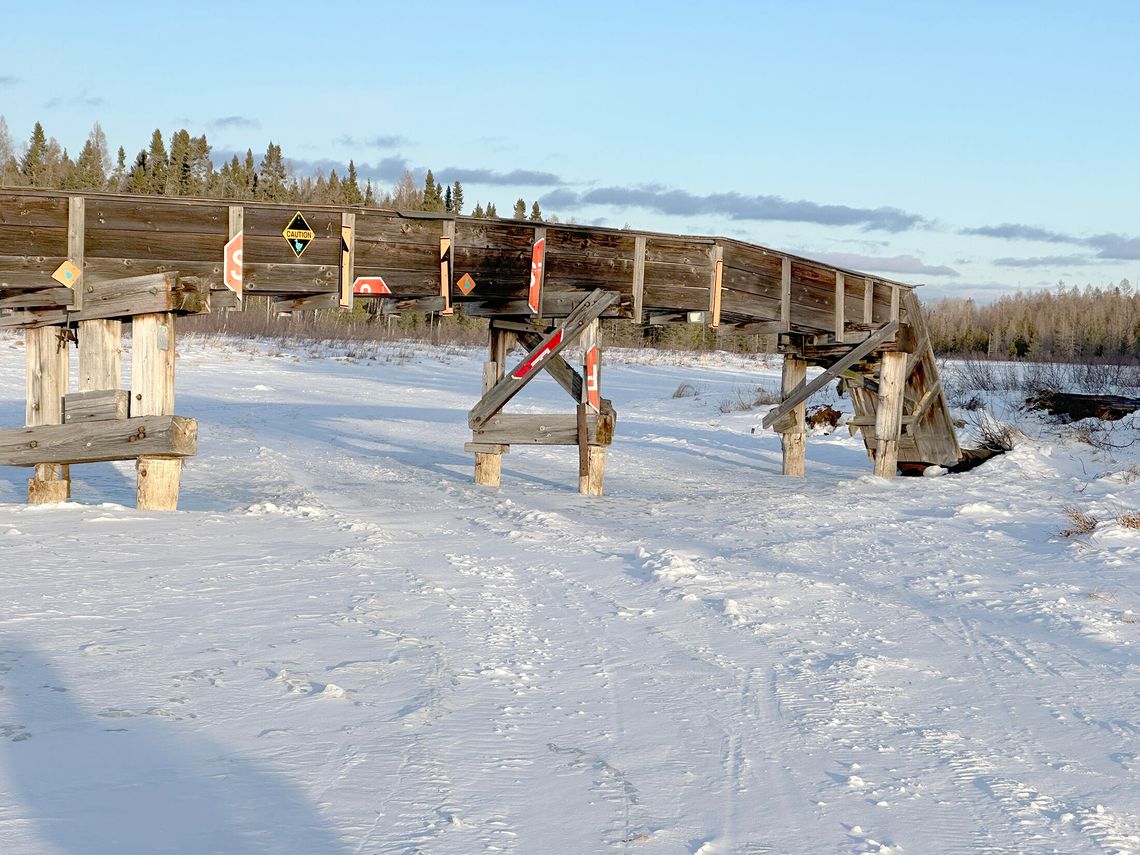
In most areas, the water line was buried less than four feet deep, but where the line crosses the rivers and other wetlands the lines are exposed or have very little insulation.
The wooden bridges that support the open water crossings were last updated in 1970, and since then, the bridges have become structurally unsound with deteriorated cross beams and pilings.
Exposed sections of the water line have connecting hardware that has experienced corrosion, and the water intake structure in Burntside Lake also has significant corrosion and is in need of repair.
Multiple leaks have occurred along the water line due to movement during the winter months because of the lack of insulation and minimal depth at which the line was buried.
When the line leaks ,the city must respond as an emergency situation, given it’s the only source of water, using anywhere from 600,000 to a million gallons a day.
The city proposes improving the intake structure and piping, as well as pump house improvements.
This will include a new pump, automated controls, remote access and monitoring and providing adequate capacity in case of a water main emergency requiring additional flow.
The existing cast iron pipe is also beyond its design life and requires replacement. Because of wetlands and river crossings, city officials say it’s nearly impossible during most of the year to access sections of the line.
To provide a more resilient supply, the bridges would be replaced with 3,300 lineal feet of directional-bored high-density polyethylene water line beneath the rivers and wetlands, at an adequate depth to protect against freezing and frost damage. The remaining 22,000 linear feet of cast iron water main will be replaced by open trenching methods.
In addition to the federal funding for Ely, Stauber secured funding for infrastructure projects in Mt. Iron/Eveleth, Keewatin, Cook, Coleraine, Pine City, Hibbing, Nashwauk, Keewatin and Duluth.