Despite preliminary alarm surrounding early-season tick bites around the United States, Minnesota’s summer tick season has shaped up mostly on par with normal.
The CDC released data this April demonstrating that weekly rates for early season tick-related visits to the ER were higher by that time of year than any year in nearly a decade.
However, epidemiologist Alex Garvin at the Minnesota Department of Health said the trend has not held in Minnesota, with 2026’s outlook similar to 2025.
“It seems like a pretty standard year for ticks in Minnesota,” Garvin said.
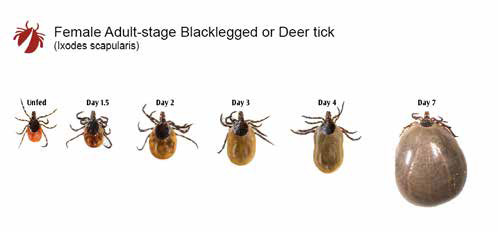
Black-legged ticks, conventionally referred to as deer ticks, carry Minnesota’s three most common tick-borne diseases: Lyme, anaplasmosis and babesiosis. Black-legged ticks are most active in late spring and early summer. They enter a resting phase in mid-summer before heavily returning in the fall.
“We’re in this high-risk season, so it can feel like there are lots out there, but it seems to be very on par with prior years,” Garvin said during a mid-June interview. St. Louis County is among the highest-risk counties in the state for tick bites. Garvin said 232 tickborne disease cases emerged among St. Louis County residents in 2024, with numbers for 2025 still in the works, but Garvin says preliminary data points to numbers in the mid-to-upper 200’s, with Lyme comprising the majority of those cases.
These numbers do not include those who come to visit from other counties and regions, because case instances are counted by the affected individual’s county of residence.
“Northern Minnesota has that ideal black-legged tick habitat with all the wonderful forested areas that also provide
great spots for people to go outside and recreate,” Garvin said. “There are ample opportunities for people and ticks to encounter each other.”
St. Louis County residents have consistently had among the highest Lyme case numbers of any county in Minnesota over the past few years, typically only trailing a handful of high-population metro counties — namely Hennepin, Washington, Ramsey, Anoka and Dakota. St. Louis came in sixth for 2023 and 2022 and fifth in 2021. Numbers for 2024 and 2025 were not yet included in the data set.
Minnesota has seen a general increase in case numbers for tick-borne diseases statewide over the past few decades, even as numbers fluctuate year-to-year. Blacklegged tick distribution has also expanded over the years. Milder winters, springs and falls have contributed to the trend, with higher tick survival rates in temperatures over 40 degrees with little to no snow coverage. Greater numbers of people outdoors enjoying warmer temperatures during those seasons also facilitates a higher number of tick encounters, amplifying the
effect.
“If we have several weeks of gorgeous, perfect Minnesota weather, people will want to be outside, and there are so many opportunities to have tick exposure,” Garvin said.
Patient and healthcare provider awareness also plays a role. Health professionals have access to better tests now to diagnose tickborne disease cases and diagnose them earlier, further contributing to the increase in reported cases.
Garvin advises people recreating in woodland areas to wear EPA-registered insect repellants, put on longer pants and sleeves, and consider applying permethrin to clothing and gear for an added layer of protection.
A person can toss clothing in the dryer for 10 minutes on high heat to kill any ticks that might have latched on while outdoors.
Garvin also encourages outdoor enthusiasts to bring pets to the vet to ensure they have the necessary protection.
“There’s definitely no need to panic,” Garvin said. “Just be conscious of tickborne disease risk and take steps to avoid bites when outdoors.”