The Superior National Forest covers three million acres, including one million designated wilderness. In this landscape, people have lived, worked, and explored for centuries because of its scenic beauty, natural resources, recreation opportunities and wildness.
Summer of Wildfire
This past July, a large lightning storm with little rain spread across Minnesota and Ontario. Weather models tracked ground lightning strikes across the droughtstressed boreal forest landscape. In the following days, extremely hot, windy, and dry El Nino driven weather caused these small fires to grow quickly. Over two months, more than 1,000 firefighters and three complex incident management teams assisted with managing and suppressing the wildfires, which burned over 70,000 acres.
Across the larger regional landscape at 4.46 million acres—which includes Quetico and Wabakimi Provincial Parks—wildfires burned roughly one million acres, mostly in Canada.
Landscape Changes
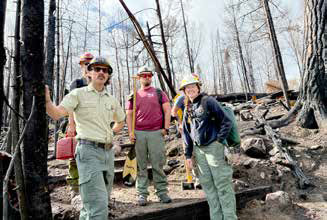
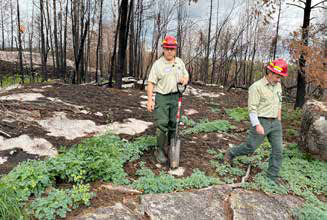
This fall, Forest Service specialists and partners visited the fire-impacted areas to study the changes.
They looked at how the fires behaved, historical context compared to past fires, how the forest is recovering, and how to plan for a future with other events.
During the visit, local wilderness rangers headed into the Boundary Waters Canoe Area Wilderness (BWCAW) to inventory campsites and portages for maintenance work to reopen remaining areas.
The group discussed the tough decision to close the popular BWCAW for public and firefighter safety. The BWCAW is highly popular, seeing up to 10,000 visitors a day in the summer.
Forest Regeneration
Specialists explained and showed wildfire effects and how forest regeneration occurs: Mosaic pattern: The fires left a “spotty” pattern in many burned areas showing varied wildfire burn intensity levels depending on vegetative fuel types and conditions. Numerous weather and vegetation factors affect fire intensity and the burn severity. For example, pine species are mostly fire dependent, while deciduous trees like aspen and maple tend to be less flammable.
Vegetative Conditions: Drought conditions, insect infestations like spruce budworm, and heavy ladder fuels like balsam fir all increase the potential for fire to spread into the canopy and cause running or crown fires.
Soil Resiliency: Soil scientists found that overall, the wildfire did not cause widespread loss of organic matter in the soils. Forest regrowth is expected to return to a normal rate.
New Life: While some old pine trees were lost, new native plants are growing. Tiny brightly colored liverworts were holding the soil together, and aspen shoots and wildflowers are thriving with full sunlight and new nutrients from the fire. Many native wildlife and plant species depend on disturbance patterns for new browse and habitats.
Historical and Cultural Fire In addition to historical wildfire cycles, specialists discussed how Indigenous people, namely the Border Lakes Ojibwe, used planned fire at regular intervals for maintaining food and medicinal plants like blueberries, to reduce ticks, and create wildlife habitat for moose and other game.
The group also visited the Fire and Ice Interpretive Trail, which 55 years previous was impacted by the Sioux Fire in 1971 (15,000 acres). Here, red pine cross sections were viewed showing evidence of fire scars every 10–20 years from the 17th century to 1905, followed by nine decades of fire suppression. Ecological records of large wildfires that occurred over the past 300 years, including recent fires such as Pagami Creek (92,000 acres) and the Ham Lake fires (75,000 acres), show that the July Lightning Wildfire was not unprecedented for the area.
Looking Ahead
Next year’s weather cannot be predicted, but we can prepare for future wildfires if we live or travel in fire-dependent areas such as the boreal forest and the BWCAW. You can help by: 1. Making your home and property more fire-resistant (home hardening).
2. Creating a clear, defensible space around structures.
3. Using extreme caution to avoid accidentally starting campfire or equipment fires.