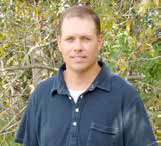
The 1854 Treaty Authority’s Resource Management Director, Darren Vogt, presented at Nov. 18’s Tuesday Group about the organization’s many local initiatives and goals — which range from wild rice stewardship to treaty rights advocacy.
Vogt says the interest in wild rice in particular has “exploded” over the past decade, with agencies, researchers, and students jumping on board and launching new projects.
“It’s a year-round thing now, coordination on wild rice,” Vogt said.
For the 1854 Treaty Authority, a primary aim is to help Grand Portage and Bois Forte tribal members exercise their treaty rights on off-reservation lands across the ceded territory, which encompasses nearly all of Minnesota’s Arrowhead. These protected practices include access to hunting, fishing and gathering.
The wellbeing of Northern Minnesota’s woods and waters, as well as access to public lands, is integral to exercising traditional and ongoing tribal rights. The Authority runs a variety of programs to ensure resources are maintained.
“Natural resources are cultural resources. Often we’re pigeon-holed, you know, is a moose a natural resource or a cultural resource? Is manoomin — wild rice — natural or cultural?” Vogt said, “It’s the same thing.”
Staff members juggle dozens of projects, including forest management, deer population monitoring, sturgeon stocking in the St. Louis River and even planning for elk restoration in the Cloquet area.
The Treaty Authority additionally runs an outreach division. Many recent education initiatives have aimed to boost outdoor access among tribal youth, with a slate of ATV safety programs, archery, wild rice camps and more.
Of course, manoomin has continued to be a priority. Since 2015, the Treaty Authority and its partners have seeded nearly 100,000 pounds of rice in the St. Louis River Estuary.
“The Fond du Lac Band has really taken the lead on getting the seed,” Vogt said, “Our role has mostly been monitoring, but the Wisconsin and Minnesota DNRs have roles as well.”
Many other projects beside the manoomin efforts involve collaborations with the tribes themselves and other entities including state agencies, the Forest Service and various committees, researchers and policymakers.
“We’re pretty small, probably 15 full-time staff,” Vogt said, “We can only do so much on ceded territory. So a lot of it is cooperation with other partners.”
For land-based projects or developments across the region which could impact hunting and fishing rights, Vogt says the 1854 Treaty Authority pushes for “early, meaningful involvement” of tribes in the consultation and planning process.
Although the Treaty Authority supports the Bois Forte and Grand Portage bands, the organization does not speak for them.
“Tribes are sovereign nations, so state and federal agencies are supposed to work with the bands on that government-to-government basis. We’re always reminding them of that,” Vogt said.
The Authority has been involved with environmental impact statements and other planning projects in recent years, ranging from St. Louis River Estuary clean-up to work on wild rice sulfate standards.
“Agencies don’t always listen to what the tribes have to say or take action on it, but we’re at the table,” Vogt said, “So it’s been good progress.”
Individuals interested in learning more about the 1854 Treaty Authority and its initiatives may access the organization’s website online.