
Go to main contentsGo to main menu
Tuesday, February 10, 2026 at 4:10 PM

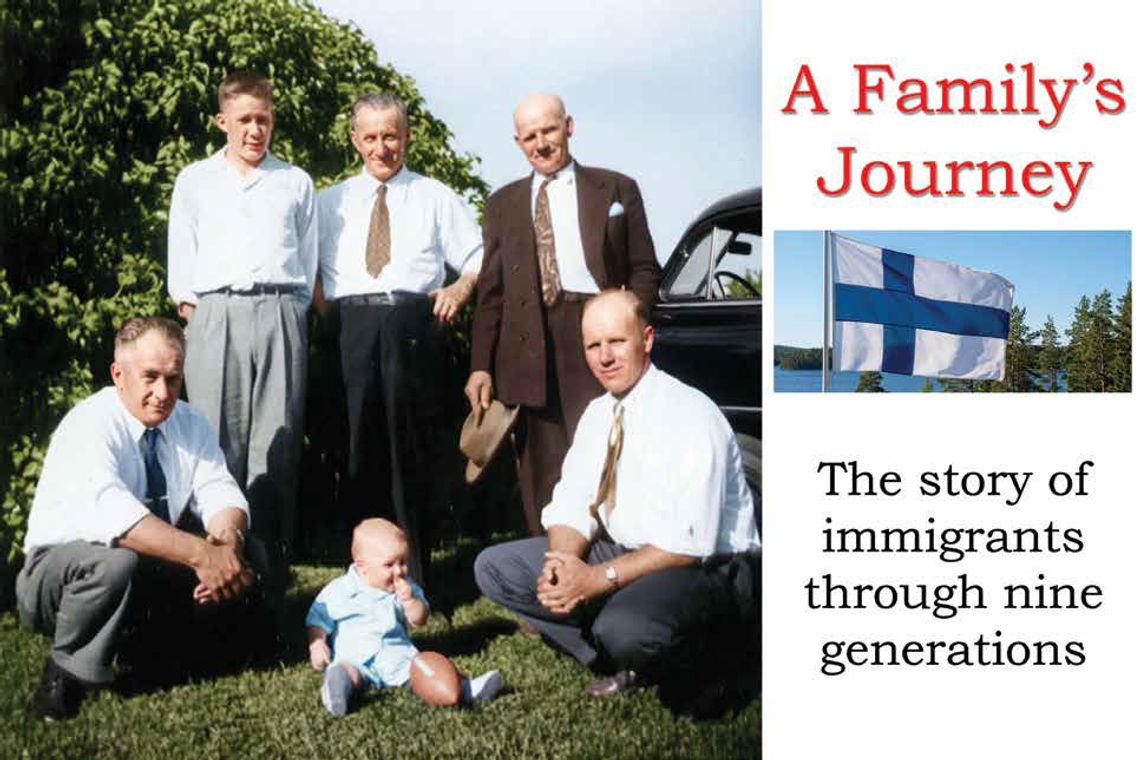
A Family’s Journey - Chapter 2: Migrant Population

A Family’s Journey - Chapter 2: Migrant Population

Evidence in archeological digs confirms they’ve been there for the last 10,000 years. Where they came from is not entirely clear. Very little is known about them until about 2000 years ago when the Roman scholar Tacitus mentioned them in CE 98 when he referred to them as “Fenni”. Ancestral DNA suggests that they originated from two movements of people: one moving north from the area of the Ural Mountains in east central Europe and the other migrating west from Siberia. Recently, their genetics have been combined with more modern Europeans as a result of expansion from western Europe.

Their homeland stretches from the very north regions of Norway and Sweden, east to Finland and along the coast of the Barents Sea in western Russia. They were a nomadic people, moving seasonally from coastal shorelines of the North Atlantic, Gulf of Bothnia and the Barents Sea. They called themselves “Sami” or some dialectic version of that name depending on which part of the north they were from. During the summer they tended fishing nets, eating fresh cod, herring, haddock and salmon. They would preserve sustenance by drying, smoking or salting the fish for use during the colder seasons of the year.

As winter approached, they would move inland and herd their reindeer stock to areas where the lichen they thrived on could be found underneath the snow. Though temperatures could be bitter cold, snow depth was not extreme, and nourishment could be gained with minimal to moderate effort. Reindeer meat made up a significant part of the diet, but they also hunted bear, moose, wolves, beaver and other animals both for sustenance and for the hides. Along the coastal regions of Norway, they also hunted seals through the pack ice.
The diet was very low in starch and consisted primarily of berries (in season) and a bread made from the powdered inner bark from birch trees. Potatoes and grains weren’t introduced until the early 1800’s.

Their domiciles were similar to Native American teepees, both in shape and function. Relatively easy to move and through millennia of engineering, quite efficient. As advancing southern cultures became common, more permanent structures for some parts of the year began to be used. A combination of wood and sod would provide inexpensive shelter.

The Sami were content in their world. For thousands of years, they kept to themselves and were either unknown or left alone by the rest of Europe and Scandinavia.

They inhabited a part of the north that no one else was interested in. They sought no dominance of their distant neighbors. In fact, socially they considered themselves one big family as opposed to tribes competing with each other. It was a simple – if at times difficult – life.

That began to change as the beginning of the 16th century approached.

A couple of historical events brought changes to their lifestyle. First, expanding

land acquisition allowed by decree from the Kingdom of Sweden allowed the southern population of the region to open forests and fen to farming further and further to the north. Land that had long been used for herding or hunting was being developed into farms and conflicts started to arise. Second, rich metal ore deposits were discovered, particularly in northern Sweden and Finland. Copper, gold, silver and particularly iron ore deposits were found in large quantities. Some mining began as early as the late 1500s and greatly expanded in the 1700s. The deposits were big enough and rich enough to be in use even today. Over 90% of Europe’s iron deposits are still in northern Sweden.

All of the early mines were underground. Besides territorial disruptions, labor shortages

also became a problem.

Many in the Sami population were conscripted and forced to work in the mines.

As a “primitive” indigenous people, they suffered the same fate as the Aboriginals in Australia and the native populations in the Americas.

Their nomadic lifestyle meant they had no ownership of the land. It was easy enough for organized society to claim it. Being a people unprepared to protect themselves with no military or weapons capable of stopping a warring power like Sweden, they were easily conquered and divided. Assimilation, known as “Scandinavianization,” changed their entire culture.

Their language was outlawed. Children were taken and whisked away to boarding schools. They had no representation in government. The first Sami member of any parliament

wasn’t elected until 1907 in Norway. In Finland, they weren’t recognized as a legal delegation until 1973.

Historically, they practiced various forms of polytheism or shamanism. By the 1800s their religion was banned, ceremonial drums and other religious artifacts were confiscated, and shamans were jailed and sometimes even executed. Only forms of Christianity were allowed to be practiced publicly. Reconciliation and apologies for these atrocities didn’t come until 2023 in Norway and 2025 in Finland. Other legal rights to historical lands and customs didn’t come until the 1990’s and early 2000’s.

Although negotiations for indigenous rights are still being negotiated, many agreements still haven’t been established today.

It was a situation ripe for emigration.

Johan Kinnunen was born in Viitasaari, Grand Duchy of Sweden (later Finland) in 1660. He was born into a Sami family who followed a nomadic lifestyle bringing them to the Gulf of Bothnia each year, and to historical herding lands near Viitasaari as winter approached. He was my eighth direct ancestor on my grandmother’s side of the family.

Coming next: Chapter 3 – What’s in a Name?


Share
Rate

Ely Echo
Babbitt Weekly