
Northern Minnesota wildfires have at last reached full containment after two months of intense firefighting efforts and top national priority.
Command of the incident transferred from a national incident management team to the Forest Service on Monday, Sept. 7, who will continue patrolling the region by ground and air.
The National Interagency Fire Center (NIFC) released its very last July Lightning Event update on Friday, Sept. 4 counted a final total of 71,675 acres burned across southern Ontario and northern St. Louis, Lake and Cook Counties.
Nine-thousand of those acres burned across the Canadian border, while 62,652 acres of Minnesota’s forests were impacted.
Per the NIFC’s last report on the wildfires, the Bear Trap, Thumb and Sioux wildfires had resulted in $55.2 million, $4.4 million and $8.5 million in costs.
The Camp Fire’s costto- date was $6.9 million on Sunday, Aug. 16, bringing cumulative expenses across all four incidents to $75 million.
Though the fires no longer require attention from the nation’s leading firefighting crews, smoldering may not end until snow covers the ground. The fires continue to burn deep in the boreal soils, fed by layers of conifer needles and peat.
The number of personnel working on the fires declined from its peak of about 1000 crew members to just 193 as of NIFC’s last update.
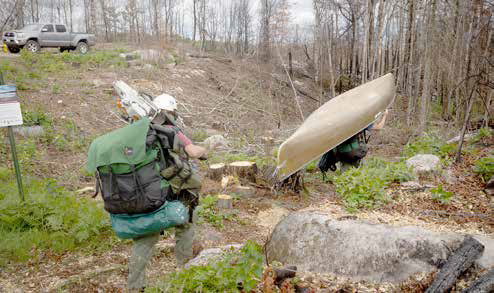
Crews backhauled thousands of pounds of gear from the areas impacted by the fire late last week after months of effort in some of the region’s most remote areas.
Some areas along the northern Echo Trail remain closed, but new reopenings occurred Tuesday, Sept. 8 for six BWCAW entry points: 12-Little Vermilion, 12A Lac La Croix Only, 13 Herriman Lake Trail, 22 Mudro Lake Restricted, 23 Mudro Lake and 24 Fall Lake.
The Ed Shave Road and boat launch, along with the Meander Lake picnic area have also opened to public use.
The Forest Service stated approximately 150 BWCAW campsites faced impacts from the wildfires. Visitors are encouraged to practice caution in the wilderness and keep an eye out for wildfire hazards.