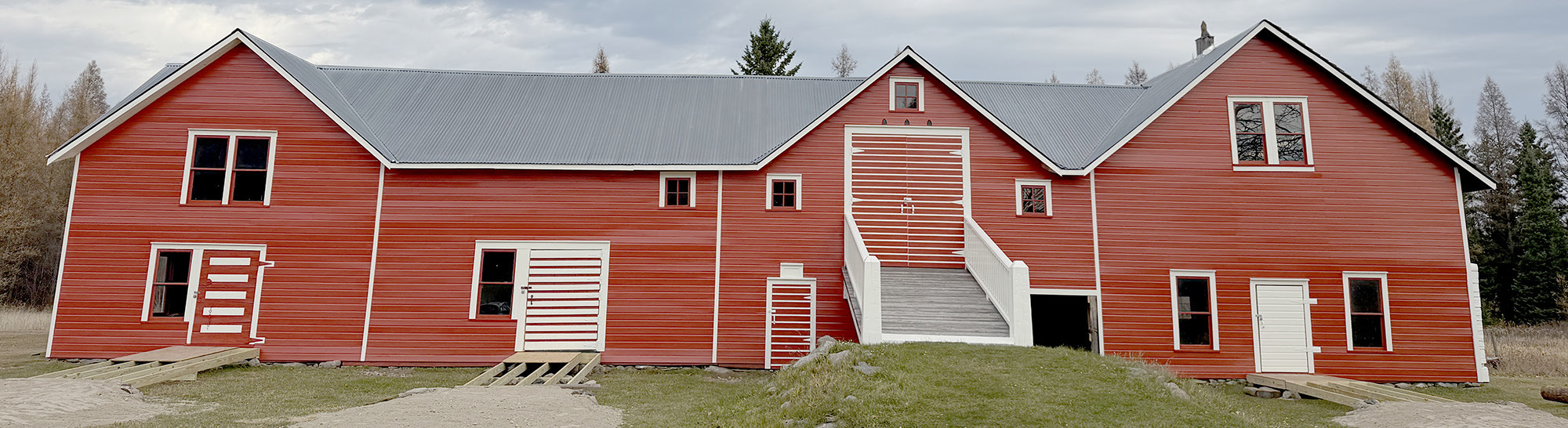
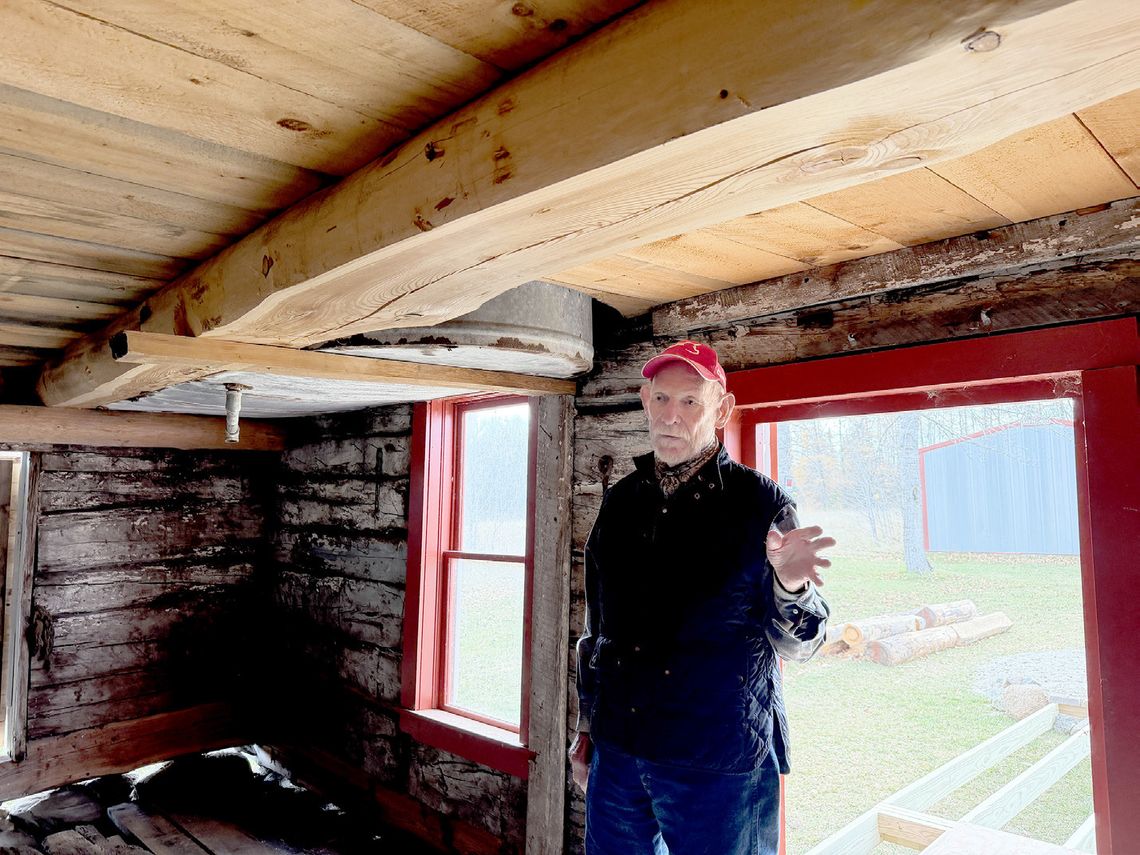
Work continues on the Seitaniemi Housebarn in Waasa Township to restore the facility to its full glory as the only Finnish- constructed housebarn in the United States.
Paul Knuti of Sisu Heritage, Inc., provided a tour of the facility, which boasts a fresh coat of bright red paint in true dairy farm style and a corrugated steel roof to replace the original cedar shingles.
“You’ve got to understand dairy operations in Minnesota. Dairy is red,” Knuti said. “And that kind of red is exactly right.”
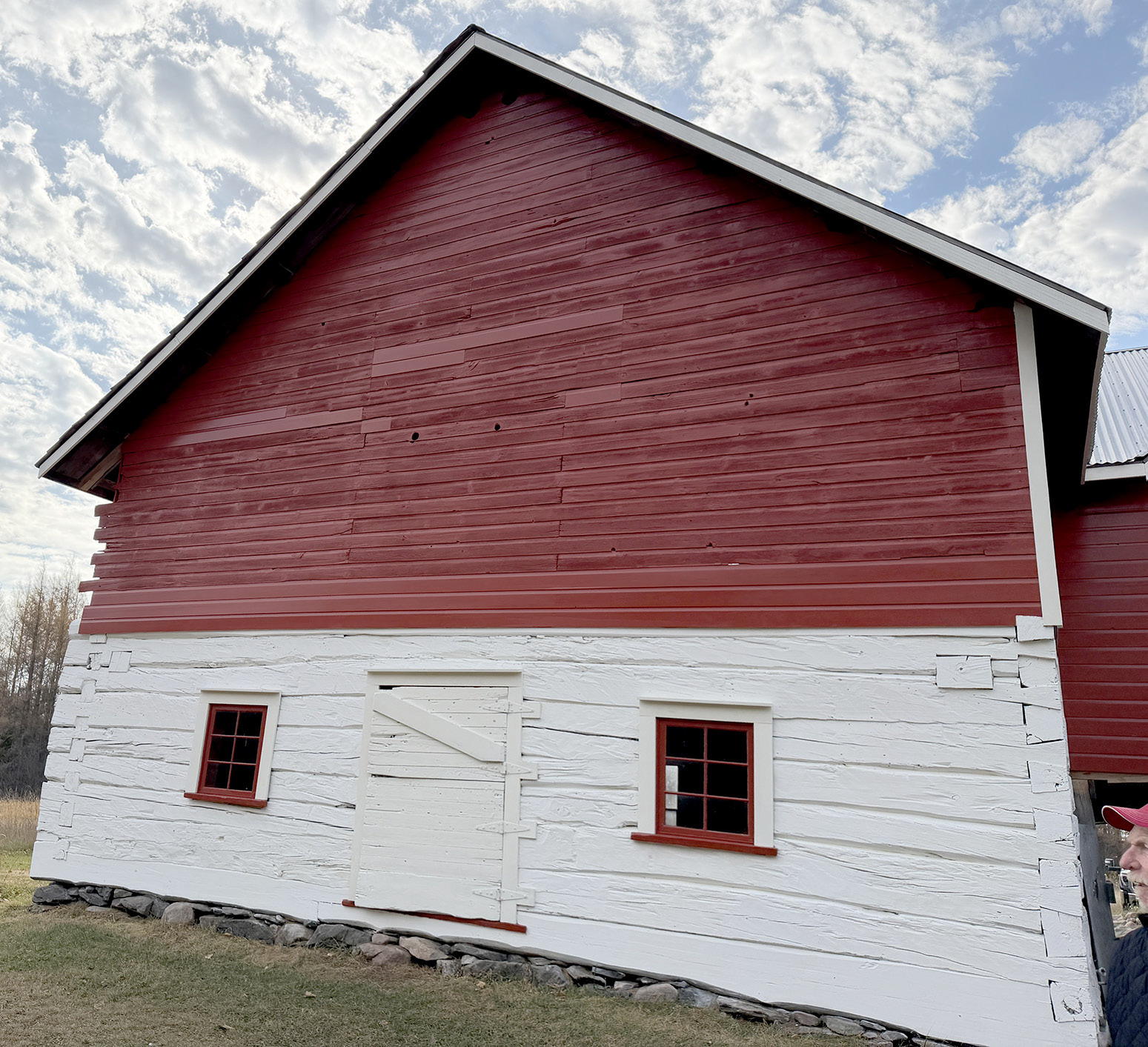
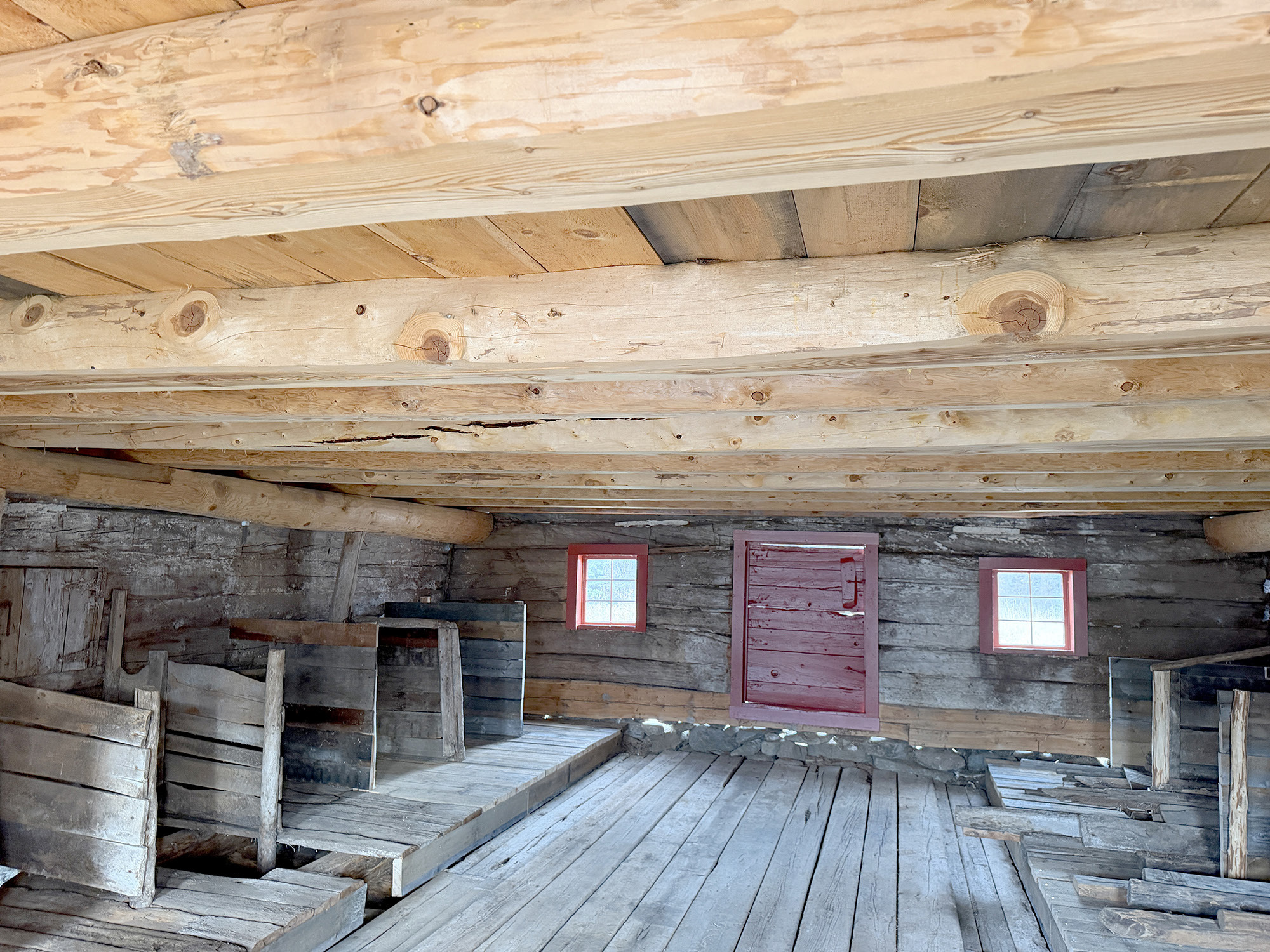
Throughout the last year, project contractors installed pinewood siding, replaced several logs within the structure and rebuilt stanchions in the cow barn with brand new timber.
About 85% of the original early- 1900s tamarack logs remain within the structure’s walls. This timber was harvested locally.
“These Finns, when they would put their log structures up, they put siding on them to make them look better,” Knuti said.
This fall, workers plan to complete three ramps leading to the large barn doors at the center of the structure and to the doors leading into the house and cow space. Gutters will be installed and stanchion refinement will continue.
Next spring will bring joist restoration under the house, and beyond that timeframe, project opportunities could unfold to include a well installation, a cover for the root cellar and maybe even a facelift of the building’s interior.
Restoration efforts began over 15 years ago and project expenses have totalled over $500,000, Knuti estimates, with another approximately $100,000 required to complete the job.
A $176,000 Minnesota State Historical and Cultural Heritage Program grant helped fund the most recent restoration improvements.
Homesteader Alex Seitaniemi completed the home sometime around the early 1920s, although the official date of construction is not known. Seitaniemi purchased the property in approximately 1904.
“It was a very well-constructed building, although it was never entirely finished,” Knuti said.
Several upper rooms were never fully polished off.
The barn’s living quarters consist of an upstairs and downstairs, positioned directly above a cellar. A large hay loft extends above the horse room and the cow barn.
“One of the great aspects of Finnish construction are the corners, how they’re put together, how they’re so tight,” Knuti said. “The interesting part of this building is that he used three or four different techniques.”
The housebarn is honored with official designation from the National Register of Historic Places as “an extremely rare and important cultural resource,” according to the 1990 application.
Though common among Czechs and Germans, Knuti said housebarns never took off among Finnish immigrants.
“I think (the Seitaniemis) just had a passion to build something really well and show how much skill they had doing it,” Knuti said.
The 80-acre property, now largely under cover of dense spruce-tamarack forest, once featured sprawling potato fields — a trend in Embarrass, Knuti said, which was once one of northeastern Minnesota’s most productive potato and rye regions.
“Farmers here, particularly in the Embarrass area, were very effective,” Knuti said.
Knuti said project coordinators hope to establish a maintenance plan and budget to ensure the landmark home remains in good condition. Future work may boost the visitor experience with parking area improvements, paths, outhouses and increased signage.
Sisu Heritage acquired the housebarn from property owners who purchased the 80 acres primarily for hunting purposes. The organization now holds a 50-foot easement around the structure.
“It is a little bit complicated, but the fact is, Sisu Heritage owns it,” Knuti said. “(It is) our responsibility for restoration and maintenance.”
Sisu Heritage works to “enhance the Embarrass Region by preserving and sharing its unique culture, climate and history.”