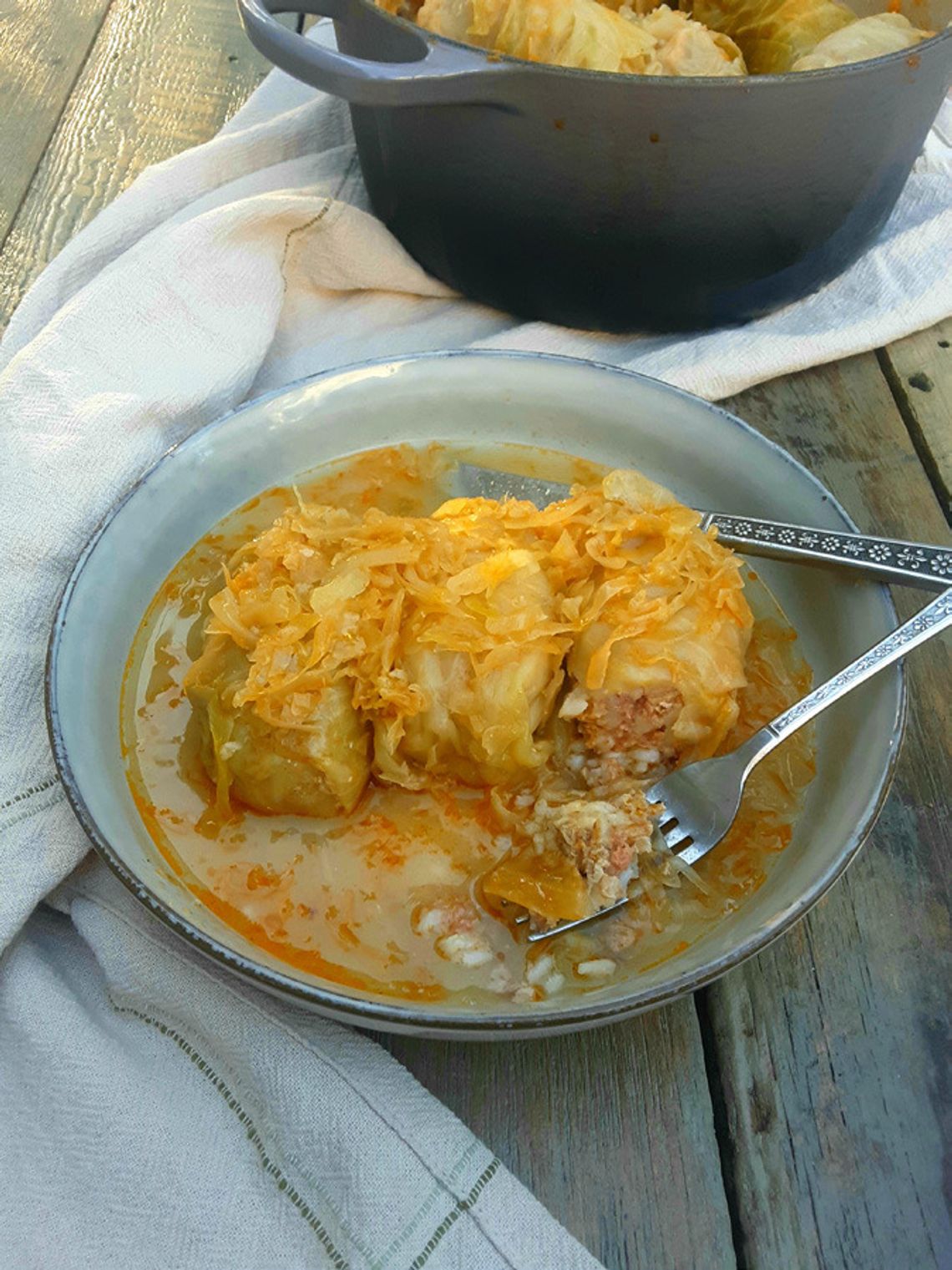
When I think about Iron Range cuisine, I think about the 5 P’s: Pasties, porketta, pulla, potica, and pigs in a blanket. Pigs in a blanket in this context are in reference to cabbage rolls, which are also called sarma. Sarma is a Turkish word meaning “to wrap.” Coincidentally, the Slovenian word ‘potica,’ at its root, also means “to wrap.” All of the 5 P’s happen to be wrapped in some fashion, filling each dish with the flavors of their ethnic origin. While it is a Turkish word, sarma are popular throughout much of Europe, with each region having its own variation.
Iron Range households often serve sarma around the holidays or throughout the cold months. These cabbage rolls are traditionally made with sour cabbage heads. These cabbages are essentially sauerkraut in whole-head form. Since the pandemic, Iron Range grocery stores have not been able to source these cabbages from their supplier in Canada. Ed Zupancich of the Babbitt Zup’s Food Market took matters into his own hands and made a batch just in time for St. Patrick’s Day. The supply is limited, but these cabbages are currently available at several Zup’s locations.
Croatian-Style Sarma
Ingredients:
2 heads of Zup’s sour cabbage
1 pound uncooked ground beef (or mixed beef and pork)
1 pound cooked ground ham
1/2 cup cooked and crumbled bacon
1 medium yellow onion, finely chopped
1 cup uncooked short-grain white rice, rinsed and drained
2 large eggs
2 tablespoons Vegeta or vegetable soup mix (see notes), divided
1 1/2 tablespoons paprika, divided
1 teaspoon black pepper
2 tablespoons lard or bacon grease
2 tablespoons all-purpose flour
1 cup water, plus enough to cover the cabbage rolls
32 ounces of Zup’s sauerkraut, rinsed and drained
Instructions:
Gently pull the leaves off the cabbage heads. Stack the large and medium-sized leaves on a plate. Set aside any small or broken leaves. Using a sharp knife, carefully shave off the thick ribs from the leaves until they are flush with the leaves. Place the beef, ham, bacon, onion, rice, and eggs in a large bowl. Sprinkle with 1 tablespoon Vegeta, 1 tablespoon paprika, and the black pepper. Mix until combined. Using a 1/3 cup ice cream scoop, portion out level scoops of the beef mixture. Form each one into a log. Place 1 log at the base of each cabbage leaf, so it goes across the rib. Roll up like a burrito, tucking in the ends as you roll. If the leaf is large, trim off the excess and set aside. Once all the rolls are done, place a saucepan over medium heat with the lard and flour. Cook until the roux is lightly browned, whisking constantly. Add 1 cup of water slowly, and continue whisking until thickened. Season with the remaining tablespoon of Vegeta and 1/2 tablespoon paprika. Place a layer of the reserved cabbage leaf scraps on the bottom of a large Dutch oven. Top with half of the sauerkraut. Nestle the cabbage rolls on top, keeping them snug. Stack any excess cabbage rolls on top. Top with the remaining sauerkraut, then add another layer of cabbage leaves. Pour the roux mixture over the cabbage. Add enough water to cover the cabbage rolls by 1 inch. Cover the pot and bring to a simmer. Continue simmering for 1 1/2-2 hours or until the rice and meat are cooked through, rotating the pan occasionally and adding additional water if the pan becomes dry.
Yield: About 24 cabbage rolls, 8-12 servings.
Notes:
Vegeta is a European spice blend, produced in Croatia. It consists of finely ground dehydrated vegetables, salt, spices, and seasonings. It can be purchased online or in some specialty food stores. Vegetable soup mix has larger bits of vegetables, but it still makes a good substitute for Vegeta.