by Tom Coombe
Legislation that could jumpstart copper-nickel mining projects in northeastern Minnesota has now cleared both branches of Congress and now moves on President Donald Trump’s desk.
The U.S. Senate passed the previously approved U.S. House of Representatives resolution Thursday by a 50-49 vote that permanently reverses the Biden Administration’s ban on mining activity in better than 225,000 acres of national forest land.
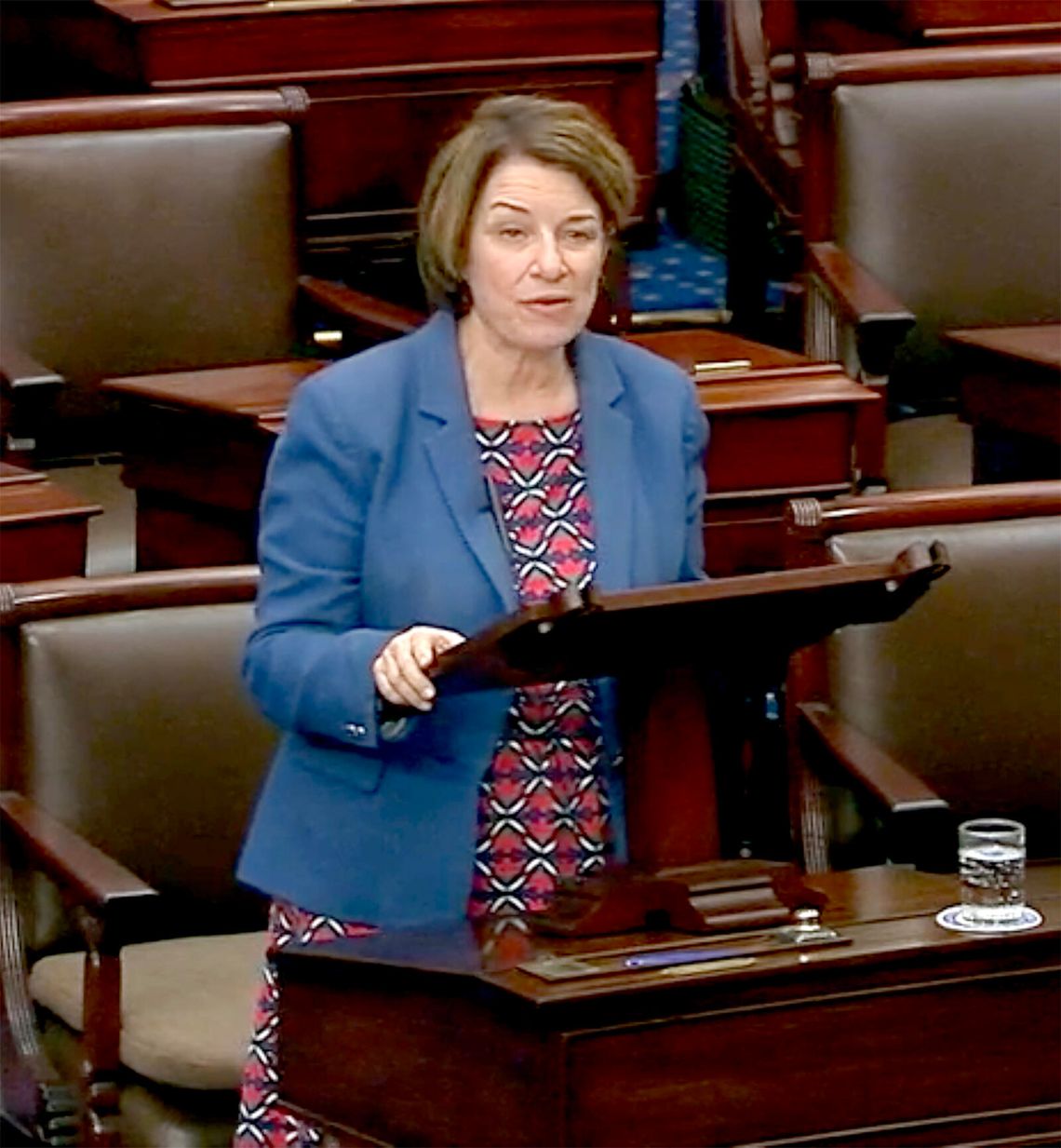
Both Minnesota Senators, Amy Klobuchar (D) and Amy Smith (D) voted no.
The House bill was authored by U.S. Rep. Pete Stauber (R) of Hermantown.
While the legislation would seemingly revive the Twin Metals Minnesota project planned near Ely, Stauber, said prior to Thursday’s vote, pushed back at the contention that it goes afoul of existing processes.
“A major victory for America and for Minnesota’s families and workers was secured today,” said Congressman Pete Stauber. “Never again can any Democrat President or administration unilaterally ban mining in this vital portion of the Superior National Forest, killing jobs and locking away trillions of dollars of critical minerals essential to our way of life. Mining is our past, our present, and our future – and the future looks bright!
“Despite the lies and hysterics from the left, my bill doesn’t allow mining in the Boundary Waters or the surrounding buffer zone, nor does it weaken environmental safeguards. It simply returns the decision to established permitting processes, where science, not politics, guides the outcome. I look forward to Minnesota’s miners and workers meeting every state and federal requirement so they can responsibly source the critical minerals, helium, and other natural resources that allow us to compete in the 21st century. We cannot continue to allow foreign adversaries like China to dominate mineral supply chains that are essential to our economic and national security,” said Stauber.
This resolution does not approve specific projects. It removes the ban, allowing proposed projects to proceed through the strictest state and federal regulatory and permitting processes.
The Twin Metals project faces fierce opposition from environmental interests, who have pressed for a permanent ban on copper-nickel mining in the region and contend it would create pollution and damage the region’s economy.
Stauber ha said he believed the resolution “will allow the facts and science to prevail.”
MiningMinnesota issued the following statement by Julie Lucas, "Today’s U.S. Senate Vote to pass H.J. Res. 140 is an important step for Minnesota workers, Iron Range communities, and our domestic mineral supply chain. We don’t need a mining ban for the entire watershed to protect the Boundary Waters. They are already protected by strict federal and Minnesota laws that require environmental review and permitting processes for any proposed mine. Those processes are designed to rely on science, ask hard questions, protect our environment, and support Minnesota’s communities and its economy.
"This vote does not open a mine. It opens the door for a transparent, science-based review. Mining and environmental protections can co-exist, and our industry is committed to making sure that happens. We appreciate Congressman Pete Stauber’s leadership and the members of Congress who supported this effort. We welcome continued engagement and encourage people to learn more about how these projects are evaluated," said Lucas.
Over the last decade, prospects for the Twin Metals project and other copper-nickel ventures in Minnesota have gone back-and-forth, depending on which political party was in power.
The Obama Administration issued a mineral withdrawal that was subsequently reversed by the Trump Administration, and then reinstated by the 2023 Biden Administration action, with an order issued by then Secretary of Interior Deb Haaland.
But Stauber charged Haaland failed to comply with the Federal Lands Policy and Management Act, related to Congressional notification of public land orders impacting an excess of 5,000 acres.
Under the Congressional Review Act, that failure appears to give Congress the authority to review and disapprove of actions such as the mining ban
If a CRA joint resolution of disapproval addressing a federal action is passed by both chambers and signed by the President, it is nullified and ceases to have effect, and requires only simple majorities in both branches of Congress.
Stauber has been a persistent advocate for mining in northeastern Minnesota, including proposed Twin Metals and NewRange (PolyMet) copper-nickel projects on the east end of the Iron Range.
Momentum related to copper-nickel mining projects has shifted back and forth over the last decade. Proposed copper-nickel mining projects remain the source of contentious debate, with supporters arguing that the projects will bring hundreds of badly-needed, well-paying jobs to the region and bolster the area economy.
Opponents contend the projects are too environmentally risky given the area’s water-rich environment and would do more economic harm than good, ravaging the amenity-based economy and destroying property values.