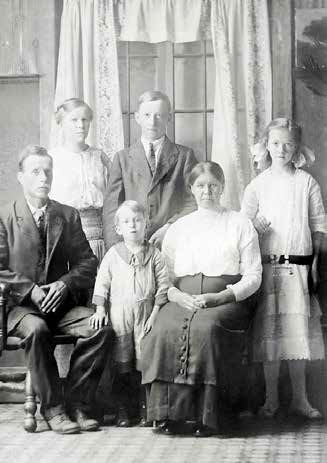
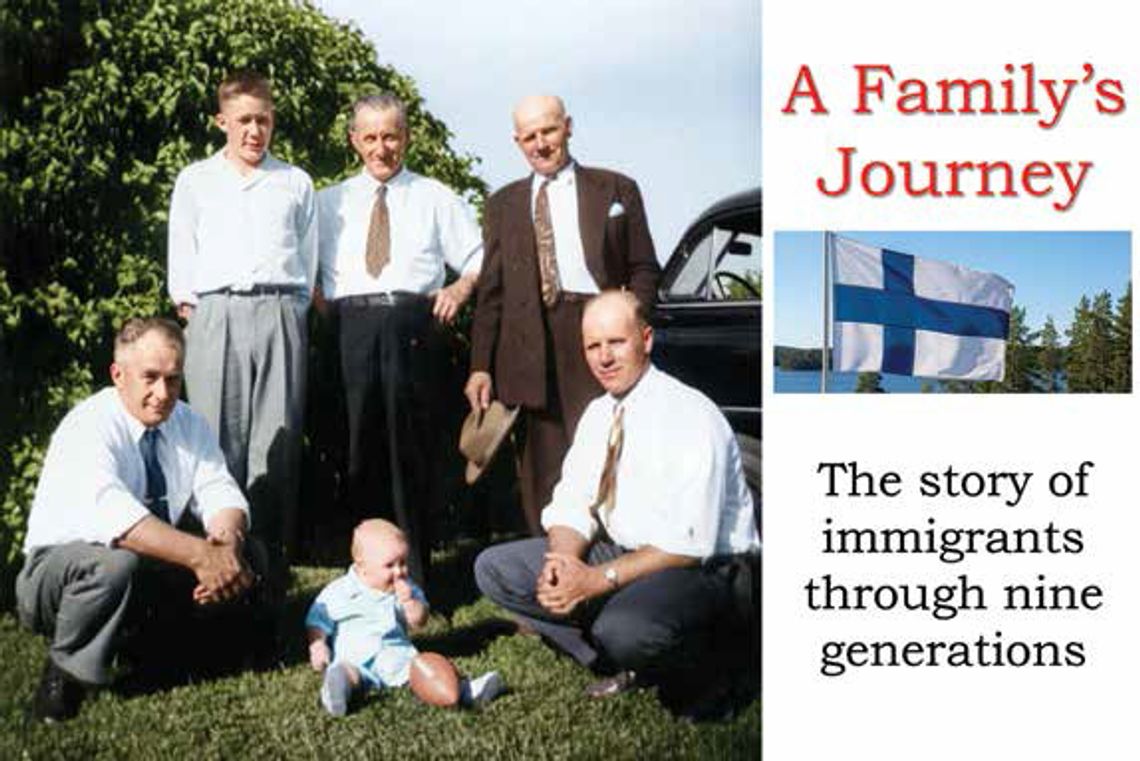
Otto Kinnunen’s family settled in Second Pool Location on the outskirts of Hibbing shortly after arriving in America. The year was 1914 and they had just crossed the North Sea in the cargo hold of a freighter, embarking from Kemi, Finland and landing at St. John’s in New Brunswick, Canada via Bristol, England.
There were friends there from “the old country” and after boarding briefly with them, were able to rent a company house from the Oliver Iron Mining Company. Like many others, Otto worked as a laborer in the mines.
The work was hard, dirty and dangerous. They made about twenty cents an hour and worked six, ten hour days a week. Ida took in sewing.
Otto Junior worked odd jobs and Helmi worked as a “piika” – or maid – for one of the mine supervisors. The two youngest children – Nellie and Wilho – attended school and did chores around the house.
It was not an easy life, but they made enough money to survive and even put some away to achieve what they really came to America for – to obtain property and start their own farm. That was a dream not available to them in Finland. It took three years, but they finally chose a forty-acre lot to homestead from a map and applied to the government to start the process.
On paper, it looked good.
About 25 miles from Hibbing, they could get there easily. There were no formal roads. Years of logging and gravel trails used by horse drawn wagons and oxen pulling drays stacked with pine logs would allow them to move directly to the property. A small lake cut into the boundary on the western edge, assuring a water supply for any farm animals they might decide to raise. What they found was acreage not as desirable as they had hoped.
This part of Itasca County was mostly flat land. Dotted with lakes and swamps, hard effort allowed most of the high ground to be made into a workable farms with room for a house, a barn, some pastureland and a large garden. A few acres could be used to grow rye for animal feed, ground into flour for bread and “pulla” and for grain to help feed the animals in winter.
Unfortunately, the retreating glaciers had treated this parcel of land differently.
As it melted, it left behind daunting mounds of glacial till filled with gravel and large field stone. Huge stumps remained from the white pine that had been harvested 20 years before. Finns were not afraid of hard work, but this was going to take some extra labor.
The whole family dug in.
The backbreaking effort to remove stumps and brush, pile rocks and try to turn soil with a plow took years.
A barn had to be built and a house erected. Most of the land was unusable for planted crops. The tops of some hills could be planted with rye grain but could only yield marginal bushels of produce.
The largest flat area had to be used for house and barn. Still, by 1921 a farm was in place.
A team of horses, a couple of cows and some chickens would mean they could be sustained.
The years of toil took a lot out of Otto Senior. He became ill and his body would not repair itself. He passed away in 1922, leaving Ida a widow with four children and a farm that was barely established.
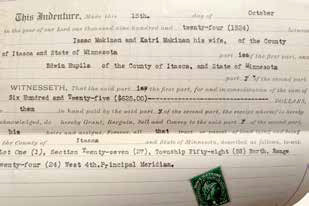
Upon Edvin’s return to America in 1918, he stayed briefly with the Levander’s and moved to Stevenson Location near Keewatin, working as a laborer in the underground St. Paul Mine owned by the Corrigan-McKinney firm. One day after his shift “in the hole”, a cave in claimed the lives of several of his fellow workers. He vowed never to go underground again and was able to apprentice with the mining company as a blacksmith. His feet were not happy staying in one place, however. He was a young, strapping male and wanted to see more of the country he had moved to. He decided to travel west by train to the Dakota’s to work in the wheat fields. Before he left, he had found a piece of property in Balsam Township