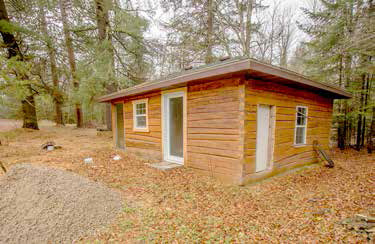
Where to start? There’s so much to do. While the sauna served as an onsite headquarters, the Kinnunen homestead was only half a mile away and provided a needed haven, equipment and provisions. Within the coming months and years, a house needed to be built, a barn erected, hay fields and garden space opened and developed. The land they had to work with was relatively flat and fertile. It had been clear cut of the virgin pine that this part of Minnesota was, until the 1890s, famous for. What was left was covered with new growth brush and rapidly growing poplar, balsam and birch dotted with thousands of leftover white and red pine stumps. The glaciers had been kinder to these acres compared to much of the surrounding countryside. Though not as rocky as some of the neighboring farms, there was still considerable field stone that must be picked to prevent damage to mowers and other equipment that would harvest the hay in years to come.
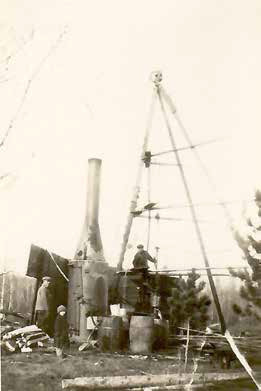
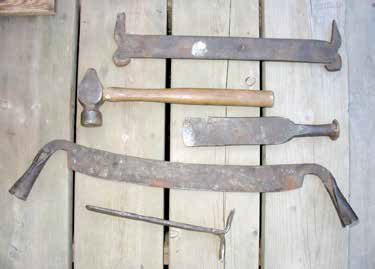
Until a working farm could be established, income had to be generated to pay for the improvements to the property. Balsam was fifteen miles from the nearest mine. Transportation being what it was, daily travel to work in the Hawkins Mine near Nashwauk was impractical at best, impossible at worst. Edwin (having changed the Scandinavian “v” to “w” by this time) had fortunately been apprenticed as a blacksmith. One of the first buildings to be built was a blacksmith shop. From here he earned money by shoeing horses, smithing tools for himself and to be sold, fabricating sled runners and barrel stoves and making repairs on farm equipment for the neighboring farms. Being the only blacksmith for many miles in any direction, he had plenty of customers. He also worked at times with an exploratory company that sample drilled for new iron ore deposits.
The house was built on a little hill overlooking the lake not far from the sauna. It was small – 22 ft. x 28 ft. - and stick built. Edwin, drawing on his earlier years in Finland when he spent time learning carpentry skills, did all the work himself. Unusual for the time, he dug out a basement
and built the walls below ground level with field stone set in cement from the land he was clearing for a hayfield. On top of this foundation came a storyand- a-half home with a kitchen/ dining area, a small family room, one large bedroom downstairs and two small bedrooms on the upper floor.
The blacksmith shop, barn and milk house were all built of square-cut logs with dovetail corners. Traditional Finnish construction that allowed for quicker construction without the need for lumber to be milled. The shop had a dirt floor and housed a fireplace with a flywheel equipped with a rotary bellows, two anvils and a wall filled with tools and stock iron rods, bars and flat iron. The milk house had a cement floor with a rectangular hole that took up one whole corner where dairy products were stored to stay cool below ground level. A cream separator stood in another corner and a large butter churn took up a third. Racks along one wall had shelving for large and small milk cans, glass milk and cream bottles and wooden boxes for butter. The barn also had a cement floor with a sunken trough that allowed water to scrub the floor to be drained under a wall on the back side and near the manure pile. There were four wooden stalls along one wall and accommodations for a chicken coop on the other.
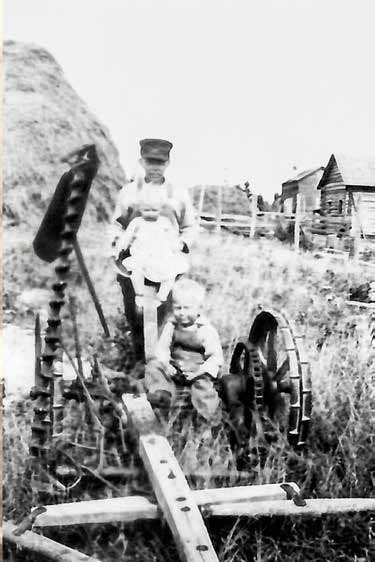
While the buildings were in various stages of construction, property also had to be prepared for pasture, growing hay and a garden. Edwin planned for two hayfields – one of about 20 acres to the east of the house and another of five acres behind where the blacksmith shop was being built. The smaller could be used to grow either rye or oats if need be. A large garden would settle in along the edge of the small field. This was no small task. Even with the advantages of relatively flat acreage and fewer fieldstone than many nearby parcels, small trees and brush had to be cut, a substantial amount of rock needed to be picked, and thousands of stumps removed. All of this took several years. The stumps were a particular problem. Massive root systems needed to initially be grubbed and then blasted with dynamite or pulled out by horses. A horse drawn “rock sled” moved the rocks and stumps to the edges of the slowly growing opening. Luckily, the Kinnunens had a good team that could be used when needed. Starting small, the hayfield grew year by year until the 20 acres became established.
To run the household and farm while these improvements were being made, immigrant families would innovate. With a garden plot not ready, any open piece of ground could be spaded and potatoes and “cow beets” – a type of turnip - be planted. “Wild hay” was harvested from some of the low land including shallow swamps. Pasture was anywhere the cows could wander throughout the property, finding native grasses and small brush to eat. Berries were plentiful from the recently cutover forest and fish, deer and upland game abounded in the new growth after logging ended. Life was not unlike the “old country.”
Soon, four cows and a few dozen chickens made up the first animals to make the opening in the woods along Snaptail Lake a “farm.” For the most part, all stock was “free range.” Housed overnight in the partially constructed barn, the cows would be let out in the morning to find what they could to eat on their own. They would be retrieved at the end of the day to the barn, not only for safety’s sake but also because cattle have a tendency to become partially “wild” and hard to manage if left on their own for too long. Besides, milking was more easily done in the barn with the milkhouse sitting nearby.
The chickens would wander the entirety of what there was of a yard during the day and roost inside their coop in the evening. The door would be closed to discourage fox, mink, skunks and other predators from diminishing the flock. With hard work, a bit of stubbornness and luck – what the Finns call “sisu” – a farm came to be.
Married in 1923, Helmi found herself expecting a child a few months later. Though not an unexpected surprise, problems soon arose. The pregnancy was a troubled one. A traveling doctor had determined that a child could cause several risks, both during term and at birth. Though most rural children in this era were delivered at home, he recommended that she be hospitalized when the time came.
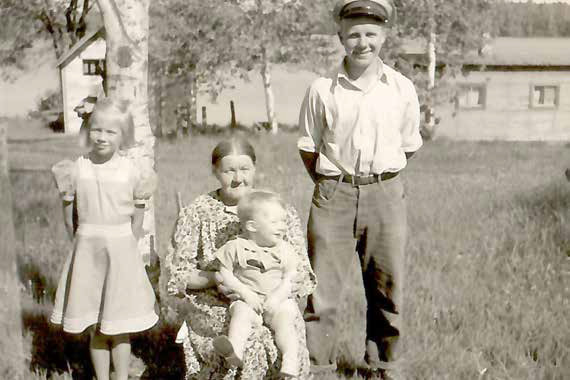
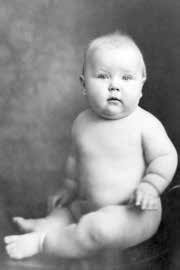
So, it came to be that Edwin brought his wife the 14 miles to a small hospital in Coleraine a few days before Christmas. As predicted, it was a difficult birth. My father, Alvar Edwin Hupila, arrived on Christmas Eve in 1924. Helmi pulled through but was advised that she should have no more children. She didn’t, at least for nine more years. In 1933 her second and last child was born. Aili Evelyn Hupila would round out this family until a new generation would arrive many decades later.
Next time: Politics and Perse-cution……. Again