Months go by with a lot of attention spent on watching birds at bird feeders. As April ends and May begins, birds can be seen and heard in greater numbers and variety by just stepping outside.
Winter residents have left. Migrants show up and then continue to summer breeding areas. The feeders that were present in winter have been put away. Scan the landscape for more color, green leaves, and first flowers. Species by species, summer residents arrive, locate desired habitat, establish territories, court mates and nest. Some ravens, eagles, and some other species are already feeding nestlings.
Maybe for next fall and winter, research and creativity will result in a new plan and approach to any idea of bird feeding. Some landscaping might provide improved winter habitat and seed or other fruit-bearing foods for birds. Or as the full moon arrives on May 1st, now may be the time to find, clean, research, and develop a working setup for feeding hummingbirds, birdbath, or nest boxes. You want to do it right and not just create problems. If it’s a new endeavor, don’t just wing it. Seek advice from friends, community members, and those with experience.
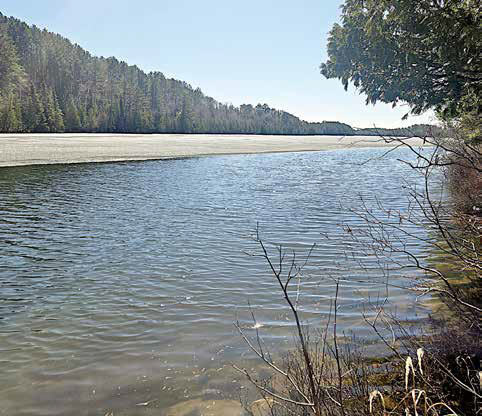
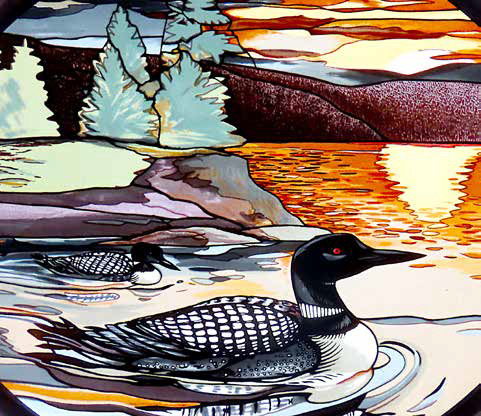
Jot down some ideas of plants, animals or places that you want to experience this spring and summer. Start with the full moon and new moon dates and night hikes. Sherry has already visited eight lakes this week to see, listen, and begin monitoring loon activity and nesting. Who will be the first out paddling on Robinson, Wood, Wolf, Armstrong, One Pine, Clear, Little Long, Tofte, Fenske, Hanson, or any of the myriad small lakes available to explore?
Are you ready for the fishing opener next weekend? Time spent on the water or shoreline of any lake in the area may lead to discoveries of the next lake, stream or river. Share what you find with others. Come back with pictures, stories to tell, maybe even some berries or other wild foods. Share your pictures and stories with others and for these articles.
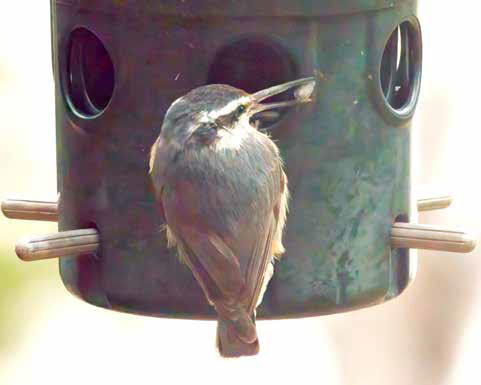
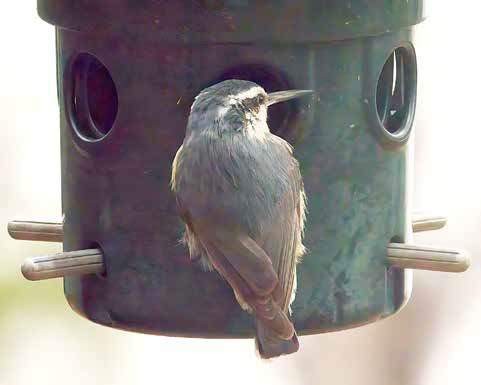
Thanks to Toni and Rich for the pictures of the red-breasted nuthatch with the beak deformity from Avian Keratin Disorder. This may have been caused by a picornavirus that results in beak overgrowth and deformities that is being researched in a number of northern species.
The Ely Field Naturalists will present Nature Programs at Vermilion Campus of Minnesota North College through the summer months on the first and last Thursday, beginning with Sherry Abst’s Loon Kickoff on May 30. Each 3 p.m. program will be preceded by a 2 p.m. campus tour and information about activities and field trips.
The location is 1900 E Camp Street, Ely, classroom NS 111. Enter at the Flag Poles and walk straight North through the hallways to the last room on the right, across from the elevator, and before going downstairs.