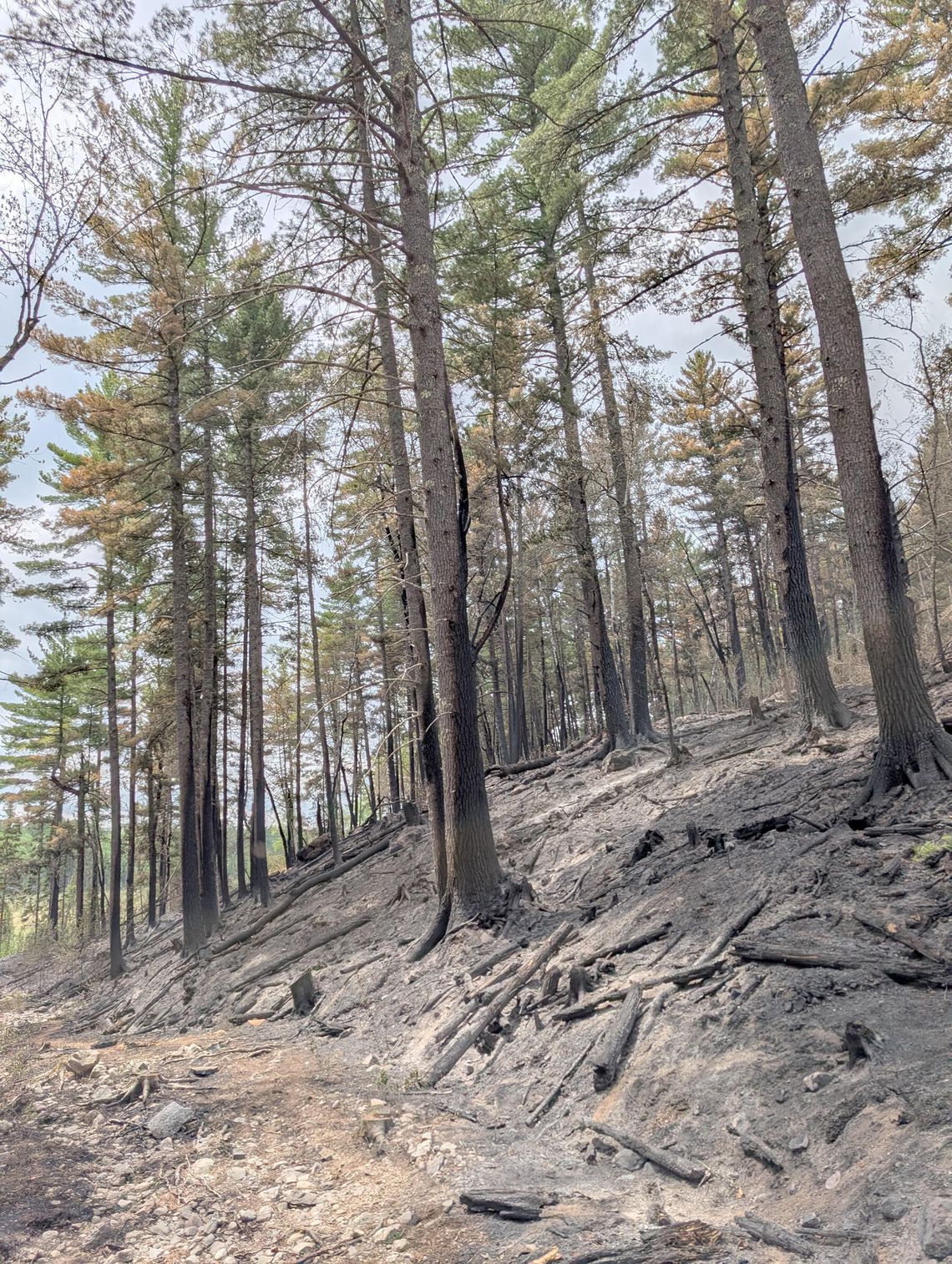
A Minnesota Department of Natural Resources-State Fire Investigator has determined that the Birch Bay Fire (started June 1, 2026, eight miles northwest of Ely, MN) likely originated during chainsaw operations associated with fuels reduction and prescribed fire preparation work being conducted by U.S. Forest Service personnel. Chainsaws can easily ignite wildland fuels when their hot engines, scorching exhaust, or sparks from chain strikes contact dry grass, needles, or woody debris. Even brief contact with these fine fuels can trigger a fast-moving wildfire.
At the time of the fire’s ignition, crews were working within the Geraldine Prescribed Fire project area, conducting chainsaw operations to prepare and maintain control lines for the future prescribed fire. Using chainsaws to prepare lines is common to ensure safe access for firefighters, reduce the amount of fuel material near the control lines, and to ensure that the control lines are secure for holding the prescribed fire. No other prescribed fire burning activities were underway, only chainsaw operations.
The Geraldine Prescribed Fire unit is part of a larger forest fuels reduction effort in the area, called the Hi-Lo Project, designed to reduce hazardous fuels in the Wildland Urban Interface (WUI), the zone where human development meets forested land, to create defensible treatment blocks WUI, to improve forest resiliency. The project includes treatment of dense understory vegetation, particularly balsam fir, which can act as ladder fuels and contribute to rapid fire spread into tree canopies. Several successful prescribed fires have been conducted in this project area in recent years.
The Geraldine Prescribed Fire was originally planned for implementation in the fall of 2025 but was delayed because the prescribed fire burn plan, which is the guiding prescription and action for the unit, wasn’t finalized and fire personnel were dedicated to fire suppression preparedness. Conditions this spring did not meet the weather and fuel parameters identified in the prescribed fire burn plan, including considerations such as fuel moisture, drought conditions, and wind. As a result, no prescribed burning operations were conducted.
The Forest Service requires chainsaw operators (referred to as sawyers) to complete training and certification requirements and follow national safety standards when conducting chainsaw operations. Chainsaws used on National Forest System lands must meet equipment standards, including the use of functioning spark arresters and other safety features.
“The Birch Bay Fire has had an impact on local communities, visitors, and natural resources,” said Drew Stroberg, Forest Supervisor (Acting), Superior National Forest, “We are committed to transparency regarding the findings of this investigation and to reviewing the incident to identify lessons learned that can help inform future operations.”
The Forest Service will continue to evaluate these preliminary findings through its established review process. Any findings or recommendations resulting from that review process will be incorporated into future operations as appropriate.