
Go to main contentsGo to main menu
Saturday, March 28, 2026 at 3:20 PM

Winter Always Has to Have the Last Word…Miscellaneous Musings by FunGirlDi

Winter Always Has to Have the Last Word…Miscellaneous Musings by FunGirlDi
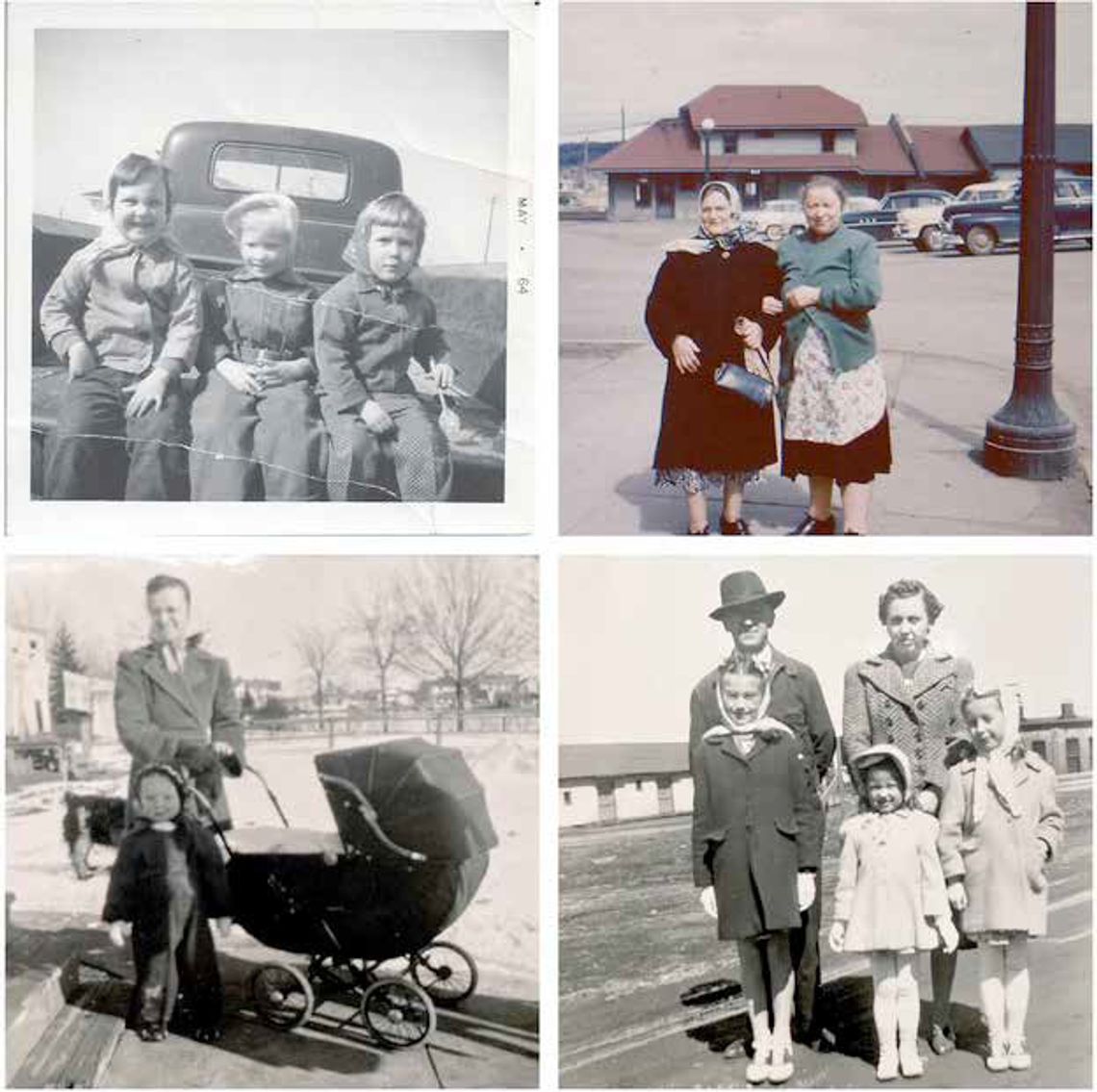
Spring used to be kerchief weather, back in the day, and these photos prove it. In the top left photo are Kay Mavetz Rhein, Sally Koski and Diana Mavetz Petrich in the spring of 1964. The top right photo shows Diana’s great-aunt, Mary Koprivetz Perme, on the left, and her grandmother, Frances Koprivetz Mavetz, circa the late 1940s. The Ely train depot can be seen in the background. In the bottom left photo, Diana’s Aunt Margaret “Ike” Bungert is pictured with daughter Virgie and son David in the stroller in April 1944. The bottom right photo shows Joe and Rose Mavetz with daughters Roseann, at left, and Mary Louise Icenhour, in the center, along with Cousin Betty Schwegel Zollar Harri, at right.


Spring is the season of the year that inspires more hope than any of the other three. So, when I heard in January that Minnesota was in line for an early spring, I was ready to believe it might arrive at once. That hopeful thought lasted right up until I looked outside and saw the thermometer diving well below zero. Winter rules with unmistakable cold authority and always must have the last word.

Still, spring in Ely never makes a grand entrance. It refuses to arrive in confidence, and we have seen repeatedly how it tiptoes in and then often retreats behind another cold front. It tries again to sneak in with politeness — quietly and cautiously, as if unsure whether winter is truly ready to leave. The snowbanks shrink a little at a time, rooftops begin to drip in the afternoon sun, and every car in town soon carries the same muddy badge of the season. Even before the ice is gone there is a feeling that something has shifted -- a softness in the air and a light that stays just a little longer.


As Northern Minnesotans we have learned to lower our standards dramatically. We view a muddy driveway or road as proof of progress. In March, a puddle can be practically a civic celebration, and a pothole of brown water is a reason for optimism.

In northern Minnesota, the emotional relief that comes with the arrival of spring is something deeply shared. Everyone up in this part of the country recognizes that moment when winter finally begins to loosen its grip after months of holding tight. I have come to think of winter as the angry stepchild of the seasons, while spring is the patient younger one -- quietly waiting its turn, never rushing, but always arriving with grace.

This winter seemed especially long to me. Influenza A arrived a couple of days after Christmas and refused to leave, hanging on through the entire month of January like an uninvited guest who does not notice everyone wants to go to bed. That dragged-out illness made January feel three times longer than it had any right to be.

Now, as I look out my kitchen window and see temperatures finally inching above freezing, the snowbanks are retreating enough to uncover gravel and brown grass—both of which suddenly look surprisingly attractive after months of nothing but white.

The look of early spring is not especially pretty at first. It arrives in shades of brown grass, gray snowbanks, and muddy roads the color of melted chocolate. People who live on gravel roads do not have to explain where they live—their cars do it for them. By March, vehicles look as if they are wearing camouflage, with spring having signed its name along all sides of the vehicle. It is as though the road itself has painted every car the same dull, non-metallic shade of brown. Complain if I must, but after months of white and cold, even mud can feel hopeful.

The sounds of spring are unlike those of any other season because they belong only to winter’s ending and spring is heard before it is believed. There is the steady drip of melting snow from the eaves, and the hollow cracks and distant booms of lake ice shifting in the night. People who live here know those sounds better than any calendar.

For some reason, this year the short daylight hours of winter had me checking the weather app daily to see the exact times of sunrise and sunset. At least once a week I found myself announcing how many more minutes of daylight we had gained since those despised short December days. Did you know the sun was setting at 4:14 p.m.? That bothered me more than it should have this year. I must admit, if we were ever going to get rid of daylight- saving time, the short days of winter gives the best reason to do it, because a 4:14 sunset feels a little too much like surrendering the day in the middle of the afternoon.

Still, the first signs of spring make people bold. We jump the gun every year, encouraging outdoor habits that belong to warmer weather—firing up the grill, cracking open windows, and stepping outside without a coat simply because the thermometer has climbed high enough to inspire false confidence. I can understand simply why 38 degrees can feel oddly tropical after January.

You start seeing kids on bikes, skateboards, and scooters even while piles of snow still sit everywhere around them. The other day I watched one boy climb onto a snowbank and launch himself down onto his skateboard, hoping the extra height would give him a speed advantage. I am not sure whether it was skill or luck, but it seemed to work in his favor.

I have already heard people say on recent sunny days, “It sure feels like spring out there today.” Yet as I walked out of the store, I was greeted by an exceptionally large, loader-created snow pile sitting in the middle of the parking lot. On the drive home, the woods were full of snow –ever so slightly retracted with no immediate intention of leaving the northland.

In Ely, spring does not arrive in color first – it arrives in smell. Before trees bud, before grass greens, before ice leaves the lakes, there is that first morning when you notice the air changes. After a long northern winter, I have to say that even mud smells hopeful. Wet earth when it appears from under snow has a dark, rich smell when the frost begins to leave the ground. By this time of year, all our senses seem to wake up at once, as though winter had muted them, and spring slowly turns the volume back up.

Friends in Eveleth tell me they have already seen robins. I have not yet had that privilege. I have, however, seen a few small flies while sitting on my front steps, enjoying the warmth of the sun—hardly as poetic as a robin, but still evidence that spring is making its way north.

Driving toward Cloquet, I noticed a few of the small rivers along the way had already shed their ice cover. The water looked dark, and I am sure it was still painfully cold. The ditches were holding water — not beautiful but unmistakably spring.

And, as always, there are already kids wearing shorts and T-shirts, as if northern Minnesota children are issued a different thermometer than the rest of us. Perhaps 42 degrees and sunshine qualify as midsummer once you have survived January. This proves once again that children here trust sunshine far more than actual temperature.

After what has felt like the longest winter in the history of the world, I find myself getting restless. At this point in early spring, you begin considering whether it might be safe to remove the snow brush and jumper cables from the car. You even toy with the idea of getting the car washed, but then push those thoughts aside, because years of experience have taught you that the moment you do either one, you will regret it.

The back door of my house is slightly congested with several pairs of boots. A few days ago, it crossed my mind that it might be time to move some of them into a storage box in the basement, but then I reminded myself that it is still only March, and April has delivered plenty of snowstorms in my lifetime. In northern Minnesota, spring may arrive with hope, but experience keeps a pair of boots by the door.

Spring can be windy, which means hats are still part of the uniform, just in a lighter form. The thick wool caps of winter can be tucked away, while lighter hats and windbreakers make their seasonal return. When we were kids, spring meant putting aside those heavy winter hats and tying kerchiefs under our chins.

Few people use the word kerchief or even know what it is. Growing up in a one-hundred- percent Slovenian home, you knew exactly what a kerchief was. My mother, grandmother, aunts, and friends wore them, tied carefully under the chin, practical against the wind, protector of a hairdo, and simply part of daily life. In those days, a kerchief was not a costume or a memory — it was just what women and girls reached for when stepping outside.

There was something about spring wind that made those kerchiefs seem especially fitting, fluttering a little at the edges while the rest of the world was also beginning to loosen after winter. I hated having cold ears and the kerchief did the trick to keep them toasty warm. Back then, nobody questioned kerchiefs. They were as ordinary as boots by the back door and just as necessary when the wind came sweeping through.

The warmth of sunshine feels more satisfying than the warmth that greets you when you walk through your front door. A furnace may warm the house, and a fireplace may warm the room, but neither can offer the kind of lift that comes from standing in the sun. After a long northern winter, you remember that Vitamin D does not come from a mechanical heat source.

The Ely Echo begins advertising the ice-out contest on Shagawa Lake, and before long you start seeing and hearing motorcycles again, their sound carrying through town like another sign that winter is finally losing its authority.

The evening I was writing this column, a weather alert flashed across my television screen warning viewers that a winter squall was a strong possibility in Cook, Lake, and St. Louis Counties. A what? If I at one time knew what that was, I had forgotten. I looked it up and learned that a squall is weather with a temper. It rushes in, makes itself known, and leaves almost as quickly as it arrived.

I woke the next morning and could have cried when I opened the drapes and saw that my almost-brown world had turned white again.

Curious, I asked Google about all types of winter storms and found a description that gave me a chuckle: a flurry is a whisper, a blizzard is a siege, and a squall is a slap. I had to agree — this one certainly felt like a slap.

When spring does not come as quickly as we would like, there is no one to call—no authority to report it to, unlike buying a house and finding the previous owners still living there. There is no office, no agency, no one who can be asked to push, pull, or hurry spring along.

I have concluded as to why spring feels so personal here. It arrives slowly enough that you notice every part of it because it does not arrive all at once. I have come to believe it has been trained in the virtues of “Minnesota nice.” It comes drip by drip, bird by bird, patch of bare ground by patch of bare ground, until one day you step outside and realize winter has finally let go.

In the Northwoods, spring even has its own perfume — part damp earth, part open water, part pine needles warming in the sun. Driving with the windows down is exceedingly invigorating and that first time of the season makes you realize how much you missed it.

Riding shotgun with the smells of spring is the incredible feeling of relief that we made it through another northern winter. Oh, what a relief it is!

As spring is working hard to appear on the left photo, Mother Nature says not so fast a day later in Ely in the photo on the right.
Evidence after the winter squall that barreled through St. Louis, Cook and Lake Counties earlier this week. These photos were taken the morning after on the deck of the Grand Ely Lodge. Happy to report much of the white has been melted by temperatures in the 40s.

Share
Rate

Ely Echo
Babbitt Weekly