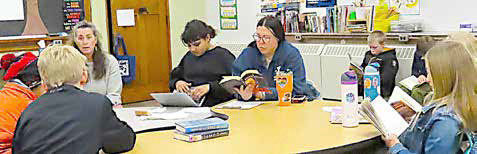
On Wednesday, the first day of April 2026, it was no April Fool’s joke. Joining after the school day ends, buses leave with students. Nine fourth and fifthgrade students each await while reading in a classroom. The books are set aside, and a large map is laid out on a table, starting preparation for an outing.
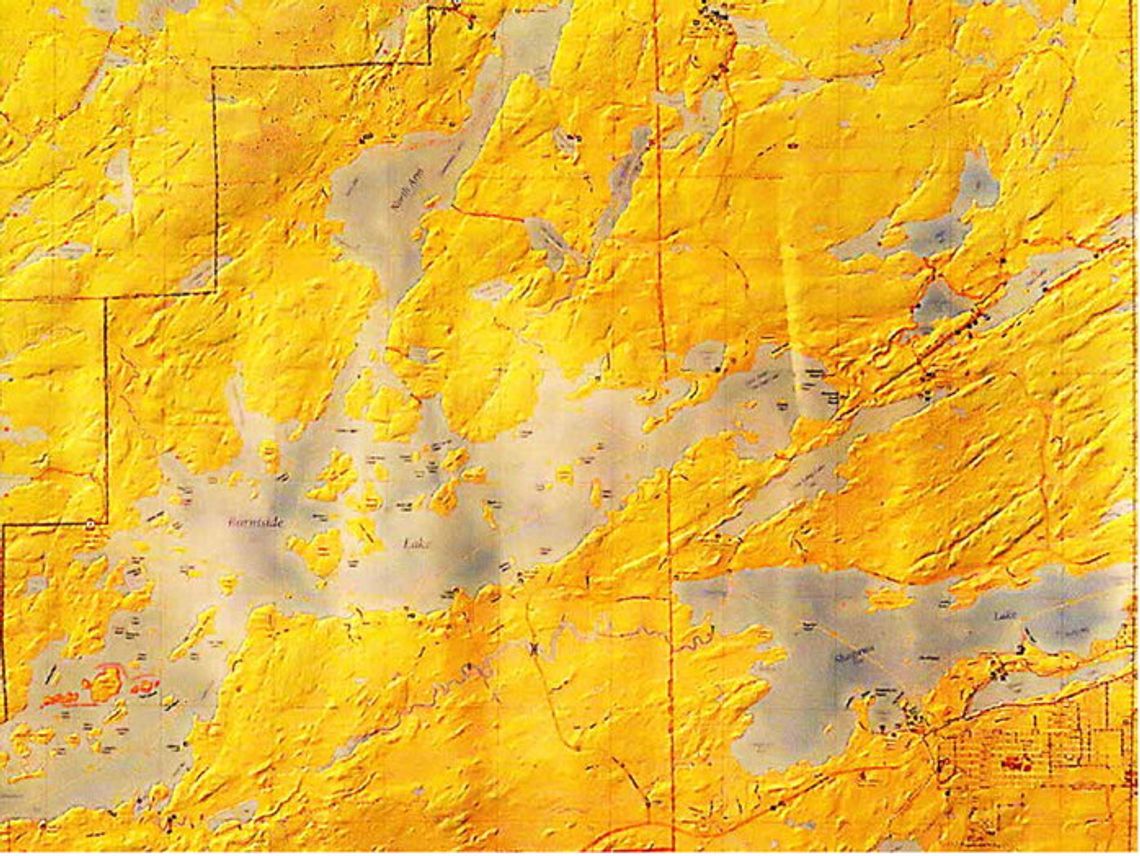
Examining the large map of the landscape surrounding Ely, everyone living in that area could find where they live and other recognizable landmarks and the watershed that flows into and through Shagawa Lake. Then a second map provides details of the City of Ely and the City’s utilities that bring water into the City, provide use of the water, and then directs the water into Shagawa Lake and out through the Shagawa River. The details of that map locate the streets, the school, and all of the storm and sanitary sewer structures in the water travels to the destination for the upcoming outing.
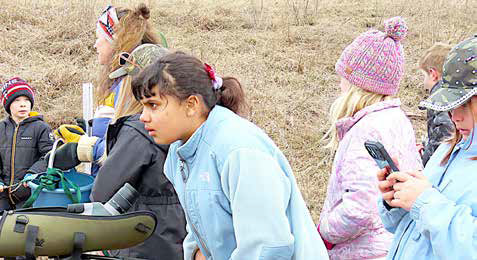
Then with binoculars, field guides, warm clothes, water sampling supplies, a spotting scope, and cameras loaded, Ely Community Resource (ECR) and Ely Field Naturalists (EFN) led the group to the Shagawa River flowing through culverts under CR88 Grant McMahan Boulevard east of Ely. Upon arrival and a discussion of the water’s travels through Ely to that location, including the water treatment plant for water coming into Ely and the water tower and use in Ely. After water is used and other water collects on the surface in town, the water flows through ditches, storm and sanitary sewers. The sanitary sewers take water to the wastewater treatment plant and then through “Stinky Ditch” which isn’t stinky anymore to Shagawa Lake. A future field trip to those facilities and “Stinky Ditch” was discussed.
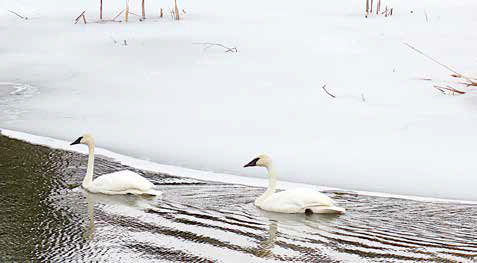
Then, from the landing, waterfowl were seen, identified, photographed, and discussed. Water temperature and other measurements were recorded. A pair of trumpeter swans (cob and pen) were watched feeding by stirring up water with their feet and then tipping with their heads under water and tails pointed up to feed. Hen and drake common goldeneyes were moving about, and pairs of Canada geese were resting on the shoreline ice.
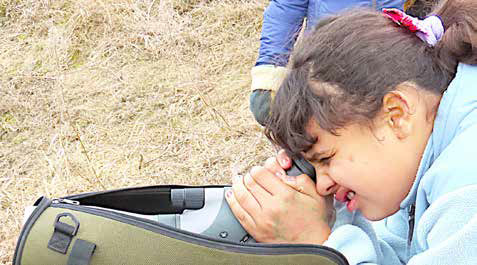
Some group photos were taken and students met the challenge of taking some pictures using their mobile phones and the spotting scope for distant shots. Male and female ducks were easy to identify, but determination male or female for the swans and geese was difficult.
After returning to the school, everyone answered some questions about their experiences and interests in exploring nature for the future school year and summer activities. It will be interesting to learn more about what they discover and share from April through the months ahead.