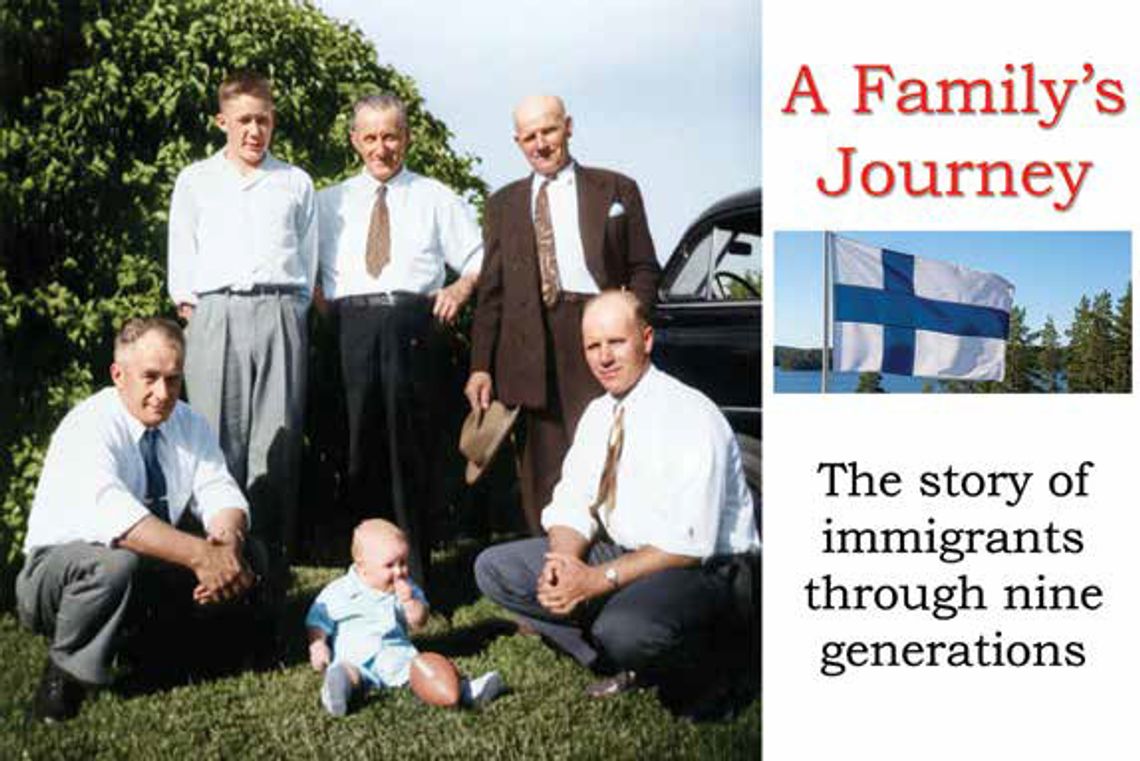
By definition, first generation refers to foreign born immigrants. Second generation refers to people born in a country (America, etc.) with at least one foreign born parent and third generation are born in that country with two parents born as citizens.
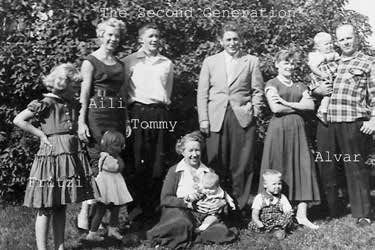
My dad, Alvar, was the first “second generation” of both the Hupila and Kinnunen sides of the family. There are not many in our family that can boast of that distinction. My dad was born in 1924 and his sister Aili in 1933. Edwin had no siblings here to add to the total, but Helmi had two brothers and a sister who also immigrated to the U.S. Sister Nellie graduated from Hibbing High School, attended the junior college there and finally received a liberal arts certificate from Bemidji State Normal College and moved from Minnesota to San Francisco. She worked as a secretary for many businesses there, never getting married. Otto Junior lived his entire life on the farm established in Balsam. He managed the farm, was the organizer of the “Cow Club”, acted as a township supervisor for Balsam, ran for County Commissioner and worked for a time at Viking Lumber in Bovey. He also was never married.
The second brother, Wilho (Uncle Bill) married Francis Cloutier and had two “second generation children, Thomas (Cousin Tommy) and Fritzi (Frances). He lived at a separate house on the Kinnunen farm until later moving to Mountain Iron. So Alvar, Aili, Tommy and Fritzi made up the entire second generation of my family. I’ll be spending the rest of this article writing about my dad and his journey through childhood to adulthood until he met my mother.
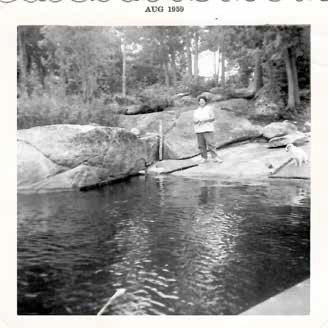
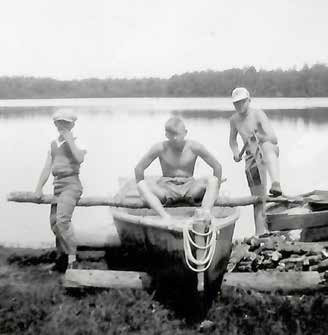
Dad was an only child for almost nine years. During his early years he lived on a farm that was being developed and was expected to participate in running that farm. Early chores involved feeding the chickens and gathering eggs, hauling firewood and general menial chores around the property. As he got older, he was charged with gathering the cows at the end of the day, milking duties, butchering, helping Helmi in the garden, carrying water and clean-up in the barn and blacksmith shop. By age ten he could run the farm with his mother while Edwin would be away for several days building houses and cabins for clients. There would be responsibilities during activities such as berry picking in the summer and shoveling snow in the winter. Social activity was very limited. There were few neighbors around his age to visit. Some of the Makinen family were nearby and after Tommy was born, he had a cousin just half a mile away. There was a family by the name of Aides that lived a quarter mile through the woods with a daughter that was similar in age to my dad. Finnish was spoken in the home, and almost all the neighbors also spoke only Finnish. During summers two sons of the Levanders, the family Edwin stayed with when he first arrived, would spend much of the summer with the Hupilas on the shores of Snaptail Lake. Veikko and Ralph (Matti) Levander were lifelong friends although they moved to other parts of the country after graduating from high school. Once a year the family would make a journey by horse and wagon to Sebeka to visit the Kärkelas, shirt-tail relatives from the old country. Two days over, one day to visit and two days back.
Dad started school at age 7, not being able to speak English. There were one room schools that came and went and he attended several of them including the Balsam Lake School, Lower Balsam School, and the Shumaker School. It was the Shumaker School that had a special first-grade class for non-English speaking students like my dad. Much of that year would be spent learning the language before they could tackle other subjects. These schools would usually house eight grades.
Greenway High School was in Coleraine and dad started there as a ninth grader. It was fifteen miles away and because for several years the school bus didn’t go out as far as Snaptail Lake, he would board with a family nearer town during the week. Besides his schoolwork, he also took interest in sports. He participated in track and field at Greenway, specializing in the high jump, broad (now called “long”) jump and the shorter sprints. Weekends would find him back home to help with the farm and what eventually became the resort.
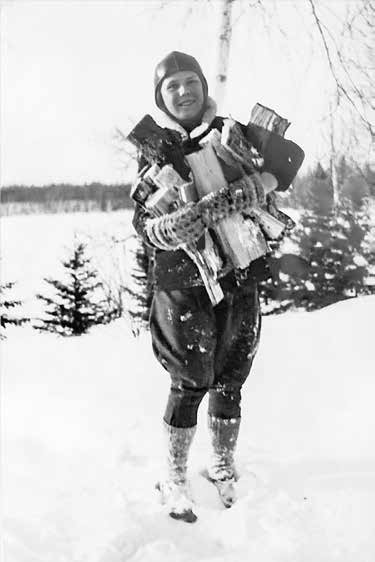
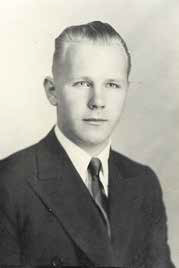
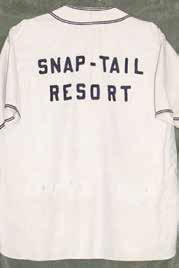
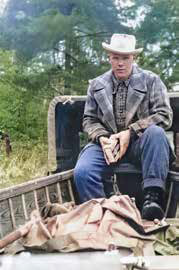
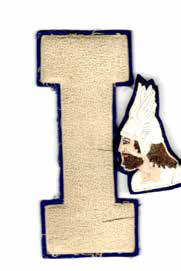
Graduating in 1942, WW2 caused much uncertainty with any future. Though he had no illusions about the romanticism of war, nor was he anxious to see combat, he felt the patriotism the country had. Most of his school chums were drafted or had enlisted. He felt a duty to be part of that. Unfortunately, the war did not want him. He was drafted once and signed up to enlist and have physicals five times – all of which he failed. As a youngster he contracted rheumatic fever, and it damaged one of his heart valves leaving a distinctive murmur. He also suffered from high blood pressure. He told the story of one of his trips to Minneapolis where he spent a night in the “brig” because the doctors suspected him of sleeping with bars of soap under his armpits. Doing so would keep one from sweating and would raise body temperature and blood pressure. He was kept under observation all night, but the numbers didn’t change the next day. He was rejected on medical grounds again.
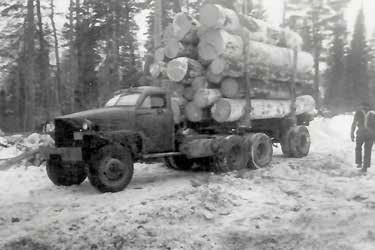
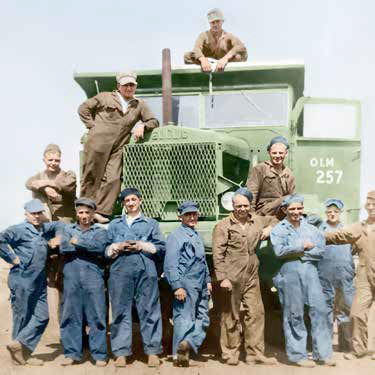
The next four years saw him work for the Oliver Iron Mining Company, attend Itasca Junior College and work in a logging camp for the Rajala brothers north of Bigfork. His time at IJC was spent studying engineering but he didn’t finish the coursework. During his time there, his interest in athletics remained and he played one season on the football team.
He finally hired on with U.S. Steel and worked with them in natural ore until his retirement. He held several jobs with them including truck driver, shovel operator, heavy equipment mechanic and finishing in “Gasoline Alley” as a garage mechanic, working on service vehicles and light equipment. He served as an officer with the Steelworker’s Union and was part of the team that would go to Pittsburg when negotiations for new contracts were due. After retiring, he was hired as the Itasca County Mining Inspector and served as that for five years.
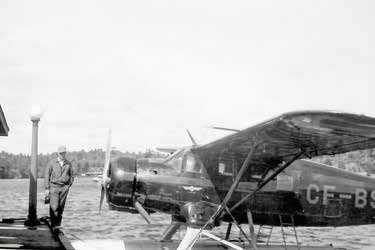
His two main interests outside of work were as an outdoorsman and an athlete. He spent untold hours on the water and in the woods fishing and hunting. From a young boy plinking grouse with a slingshot while herding cows back to the barn, to guiding for the resort for both fishing and deer hunting. He flew with friends by ski plane into Canada to fish for lake trout. From resort guests, he established relationships with those who would invite him pheasant hunting throughout the Midwest. He traveled extensively in the “Roadless Area” - later the Boundary Waters – making most of his trips to Lac LaCroix. A neighbor, “Big Bill” Bergquist’s motherin- law owned and operated “Cotton’s Resort” on that lake, and he would assist her in putting up ice in the winter and cutting firewood in the fall.
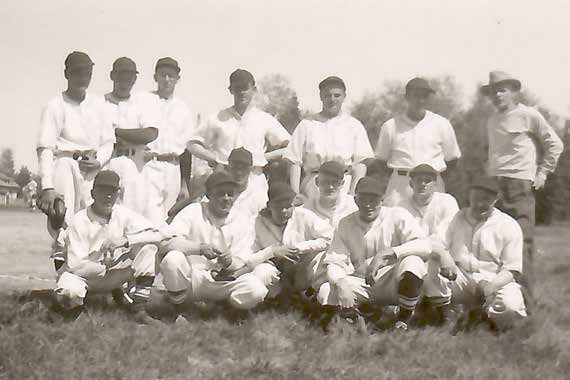
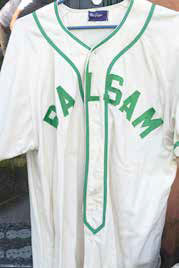
Baseball became a passion for him. Balsam had one of the teams that made up a league in Itasca County, that he played on and later managed. He and Ralph Kluck – a pitcher on the team – were invited to a New York Giants tryout camp in the late 40’s where he met and was coached by Carl Hubbell. Later in life he started the first little league baseball team in the community. He was crucial in establishing the hockey rink in the 1960s.
He felt a civic duty to be involved in Balsam. He served as a township supervisor for many years and worked with the neighborhood youth both in sports and with troubled kids as a mentor. He began and taught Hunter Safety classes for the MNDNR. He was a volunteer fireman with the Balsam Fire Department. All the while he would maintain the baseball field and flood the hockey rink.
Although his was a life full of experiences, he was born, lived and died within 80 acres of real estate. Those kinds of lives are not lived in our country anymore.
Next time: World Events and WW2