Stepping out on a sunny May morning without layers of winter clothing and feelings of temperature and freshness fill the air. Every step brings greetings of songs from white-throated sparrows, ovenbirds, chipping sparrows, and white-throated sparrows along with the distinctive tapping of a yellow-bellied woodpecker.
Spring makes a daily transformation from a world of whites, grays, browns, tans, and other drab variations of snow, ice, trunks, and branches and stems.
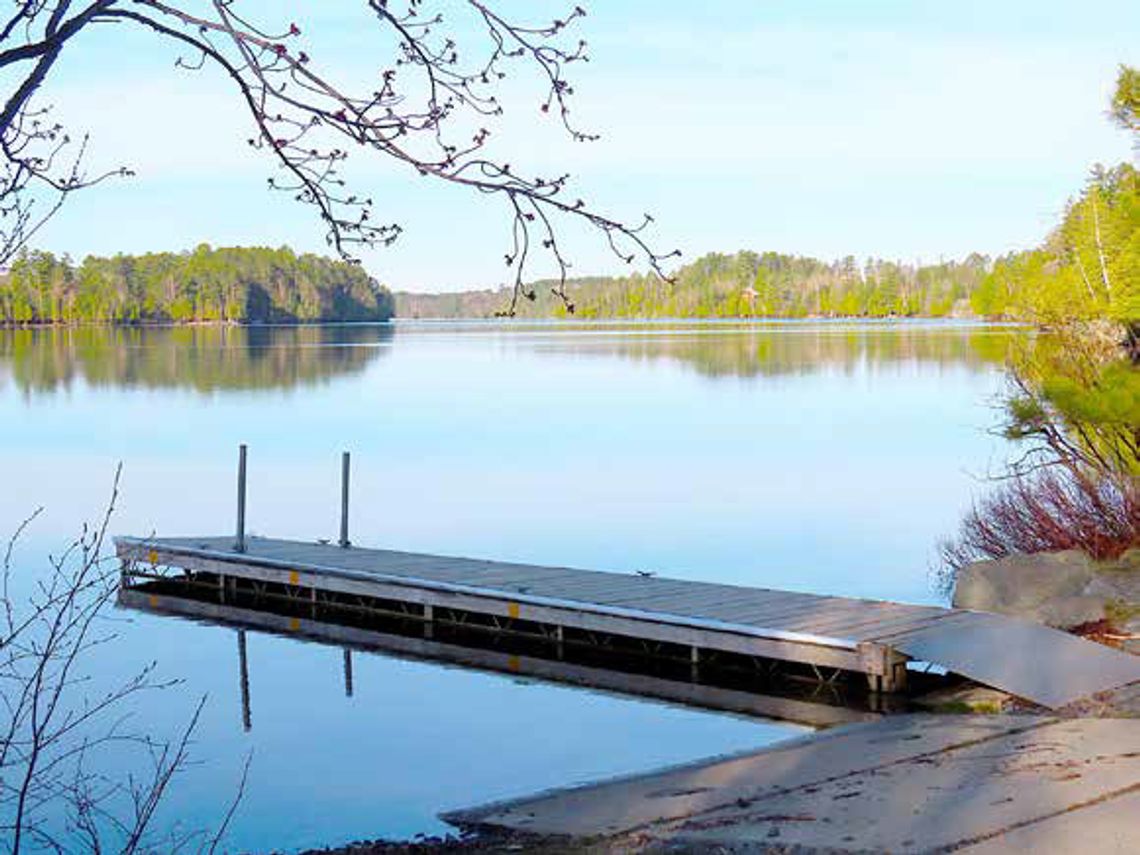
New colors appear on the landscape from landscape plantings, but ice-out has brought expansive surfaces of blue water. Blue below and blue above on a sunny morning.
Green-up has begun at ground level from green plants growing out from the now unfrozen soil. Only the beginning of fresh transformation from more green from grass, herbaceous plants, tree, and shrub leaves. The most impactful will be when the northern forests of deciduous poplars, birch, and tamarack leaves and needles provide their canopy across the continent, north across Canada.
Seeing some forms and shades of green leaves brings familiarity. When will grass need to be mowed? Is it now time to prune some stems and branches that grew last year and present some problems? What do we think about some of these non-native plants – tansy, mullein, lupine, dandelion, thistle, etc? Those raspberry patches keep expanding.
Already the What’s Doin’ the Bloomin’? book sets on the table to appreciate the Red Maple flowers and locate the Early Spring Coltsfoot flowers before their basal leaves develop.
Some of these will lead to not only plants and colors, but a chance to visit a place and flush some American woodcocks that live there.
Keep the colors of spring arriving to provide the carrot for more exploration and outings. Today, a walk also provides sightings of wildlife near a neighbor’s home in the forest. Several deer were foraging about, but no sign or reports of fawns yet.
A rather large black bear was also passing through and either the scent or the sighting resulted in a lot of barking from my walking companion.
The highlight of the week, however, was another roadside sighting of an adult broad-winged hawk. It was perched on a road sign, watching the open area of a ditch on the forest edge.
Many sightings and discussions about raptors will occur during 2026. They are not always easy to identify, but this is such a common resident of our northern forests that many of you have encountered them.
Broad-winged hawks live across the eastern states and southern Canada. This bird most likely just returned from its winter in Central or South America. The north provides extensive wild lands with a mature forest of a variety of trees. Just as the aspen that many people are watching now, as the “green-up” defines here, provides areas around homes and cabins and wilderness camp sites that suit the needs for building a stick nest in the canopy.
Finding food, nesting, raising young, and leaving during September define life for this bird. Lots of stories of encounters with broadwinged hawk can be shared. In September, sometimes thousands of them can be seen in a single day. Occasionally, someone has a nesting adult that swoops down at them as they walk from the cabin to the car, just to remind them that it’s a little uncomfortable nesting so close.
Keep getting out, discovering, sharing, and reporting. Other than ticks, there have been no first sightings of mosquitoes, black flies or many other insects yet.