Go to main contentsGo to main menu
Sunday, May 24, 2026 at 3:16 PM

WHAT RAPTORS ARE LIVING IN YOUR NEIGHBORHOOD?

WHAT RAPTORS ARE LIVING IN YOUR NEIGHBORHOOD?
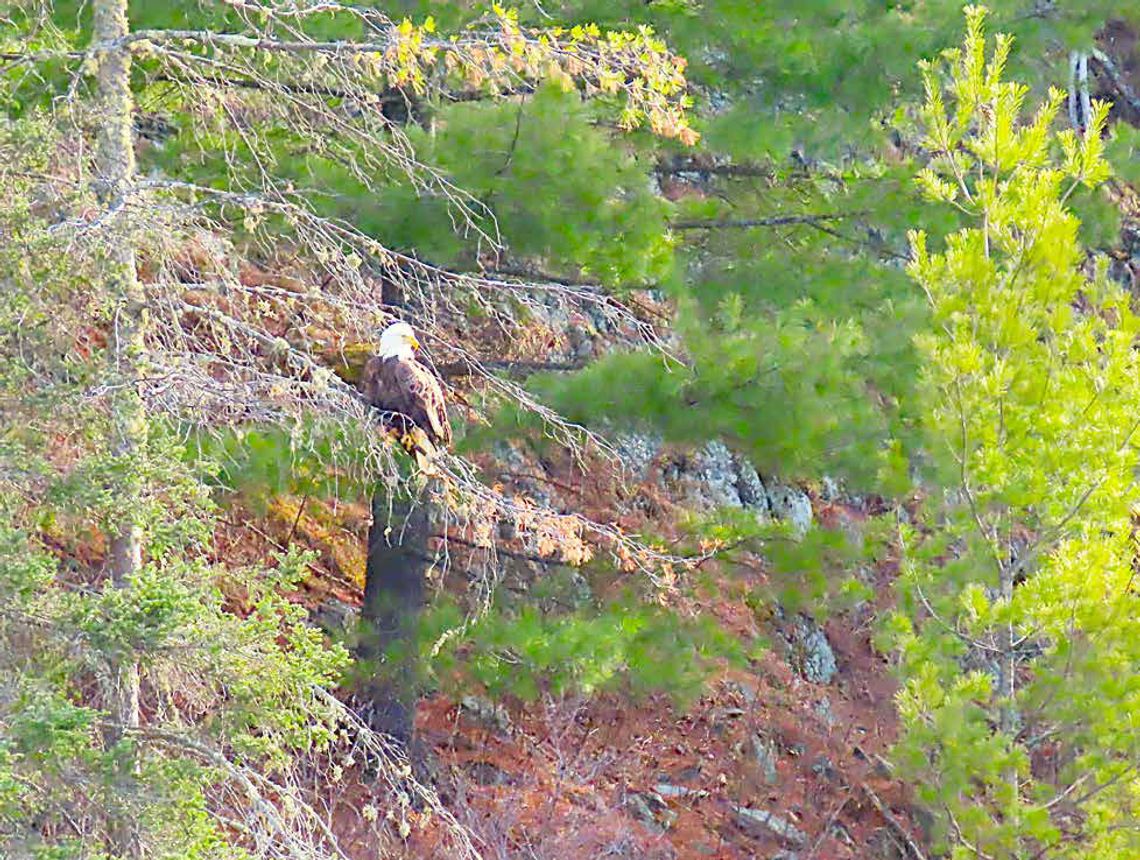
Bald Eagle. Photo by Bill Tefft.

A recent dedication last week drew attention to bald eagles. The U. S.

Postal Service conducted a dedication at the National Eagle Center in Wabasha, MN. New postal stamps, Bald Eagle: Hatchling to adult, were presented on May 14. The bald eagle, recognized by many cultures throughout North America, was adopted by Congress as America’s symbol in 1782.

Bald eagles are present in Northeastern Minnesota throughout the year and, like many other raptors, migrate during the year. Being such a large bird of prey, they are more often seen than many of the other birds of prey, although often confused with golden eagles that only migrate through and spend winter in Minnesota.

Raptor is a general reference that refers to birds with talons and beaks that enable them to catch and feed on animals. Bald eagles have been studied to determine how closely they are related to other “birds of prey”. To one degree or another, the bald eagles are related to osprey, falcons, kites, hawks, and, less closely, owls, among other birds of prey.

Since raptors have returned to this area and the breeding season now occurs all around us, broadwinged hawks and American kestrels are hunting along roadsides. Turkey vultures and bald eagles are seen soaring and feeding on road-killed animals. Ospreys are nesting around lakes like Tofte Lake and visiting Miner’s Lake and catching stocked trout and other fish.

Many people have stopped feeding birds to avoid bear, deer, raccoons, and squirrel visits. Many people have also heard reports of hummingbirds returning and have selected feeders designed for them rather than for bees and wasps. Instead of inviting winter birds over for winter, now on the water, along a trail or around home or town, birds are singing and calling everywhere.

The raptors here are mostly nesting and hunting, where they are seldom seen in our forests. Occasionally, an unfamiliar raptor like the hawk in this photo will land after chasing a songbird into a window. This neighboring accipiter will be nesting nearby and may not be known by name. Summer residents come and go until the fall migration, when places like Hawk Ridge Bird Observatory complete their fall counts in November.

For now, May through Fall migration, it’s time to meet our neighbors.

On Tuesday, May 26, the Ely Field Naturalists will start summer with an Ely Community Resource afterschool group of young naturalists on a field trip to a bald eagle nest and a forest hike to find summer bird residents.

Thursday, May 28, from 3-4 p.m.

Ely Field Naturalists Nature Talks Program: Get Raptor Ready For Summer.

Learn and share the who, what, where and how of raptors in the Northwoods at the Vermilion Campus, Classroom NS111, 1900 East Camp Street.

Raptor photo by John Rejman.

Bald Eagle Postal Stamps.

Hawk Ridge Raptor Migration


Share
Rate

Ely Echo
Babbitt Weekly