
Go to main contentsGo to main menu
Saturday, June 27, 2026 at 12:47 PM

Loons and swans depend on you

Loons and swans depend on you
Life After Death

The discovery of an injured swan last week led to connections and actions taken by members of our community experienced in providing diagnosis, treatment and care. This incident and others led to discussions about our area and the richness and abundance of life forms that exist here.

Trumpeter Swans historically lived here and then were hunted out of existence during the fur trade era. After being reintroduced to the Midwest late in the last century, their population grew and spread back into our area. The Trumpeter Swan’s livelihood, like that of the Common Loon, stands out in its native natural habitat of lakes, rivers, and wetlands.

They both experience challenges living in an area where the use by humans has increased since the time before and during the coming of the voyageurs. Both swans and loons are only here during the period between spring and fall migration. Like any visitor during these months, they must be able to live safely for a time, considering their needs and any risks facing them.
With the life inherent to any species, there is conception, maturation, adulthood, aging, and eventual death. Birth, long life and its accomplishments are recognized and celebrated for many lifeforms. Within wildlife, the arrival of migrants, nesting, birthing, and presence during the summer months are watched, reported, and measured for success.

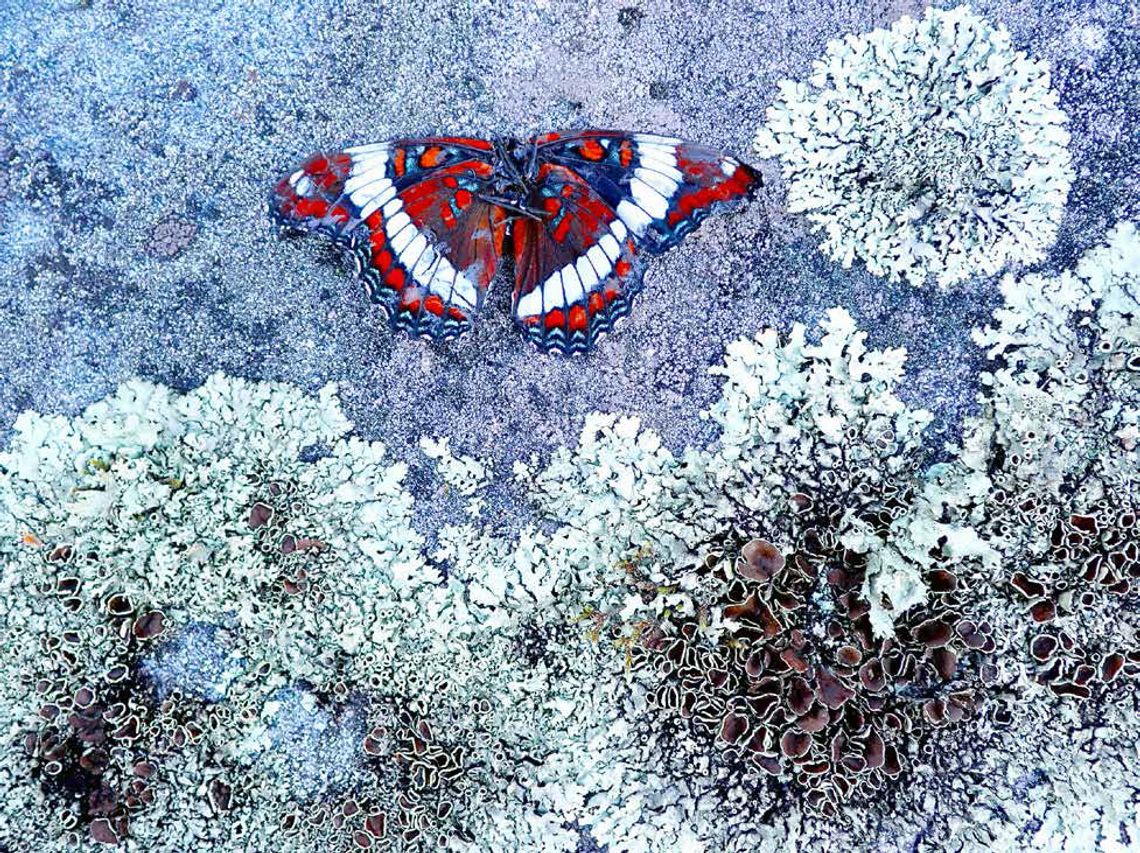
Swans and loons have specific needs for success like any other species. Do we support or impede their success? With a dead butterfly found dead on a rock amid living lichens, its nature suggests short life as an expected outcome. Finding a swan or loon injured or dead, and being a species that is not hunted and has a long potential lifespan, raises the question of cause.

They both live on water, have family territories during nesting, and depend on their territories to provide for summer needs and safety until fall migration. Since we use, live on and are drawn to those same waters, what can we do to support them?

• View them from a distance. When seen, give them space to breed, nest undisturbed, and raise their young. They don’t desire to approach you and are not seeking a close photo.

• Listen and watch for them and their young. Learn and enjoy their calls and behaviors, which have meanings. Loons are especially hard to see, and the young are small.

• When seen, move away, not closer. Wave action impacts shorelines of lakes and islands. Watercraft may startle birds off nests. Personal watercraft pulling recreationists may run over chicks.

• Harassment of wildlife is against the law. If you see harassment occurring, report it to your local DNR office.

• Get the lead out of your use in fishing tackle, small sinkers and jigs. Switch away from the lead shotgun shot. Tungsten, tin, steel and bismuth are lead-free alternates.

• Recover fishing line. It is a death threat, along with lead, to any waterfowl or birds.

• Boats or other watercraft should be kept away from shorelines and provide a wide distance from any adults or young in open water.

• Report nest locations and adults with offspring to [email protected], and the information will be entered into the loon and swan records specific to area lake locations.

• Outfitters, guides and resort owners should provide this information and share reports from their clients.

• Contact your area wildlife rehabilitator if injured or dead birds are found.

Your knowledge of wildlife and actions make a difference between safety and sometimes life or death for the wildlife. It is so important to the welfare of our lakes and forests.

Trumpeter Swan Chick Rescue
White Admiral
Painted Turtles

Share
Rate

Babbitt Weekly