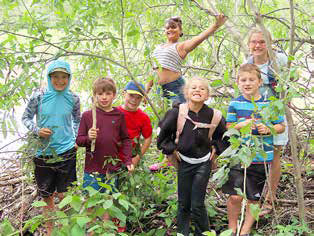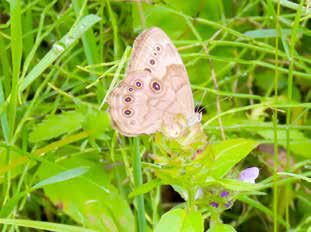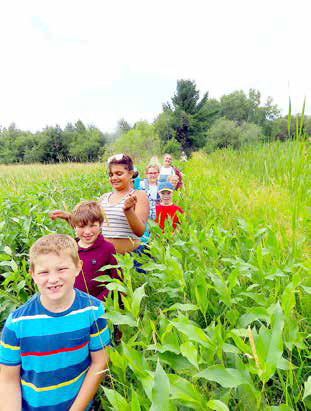
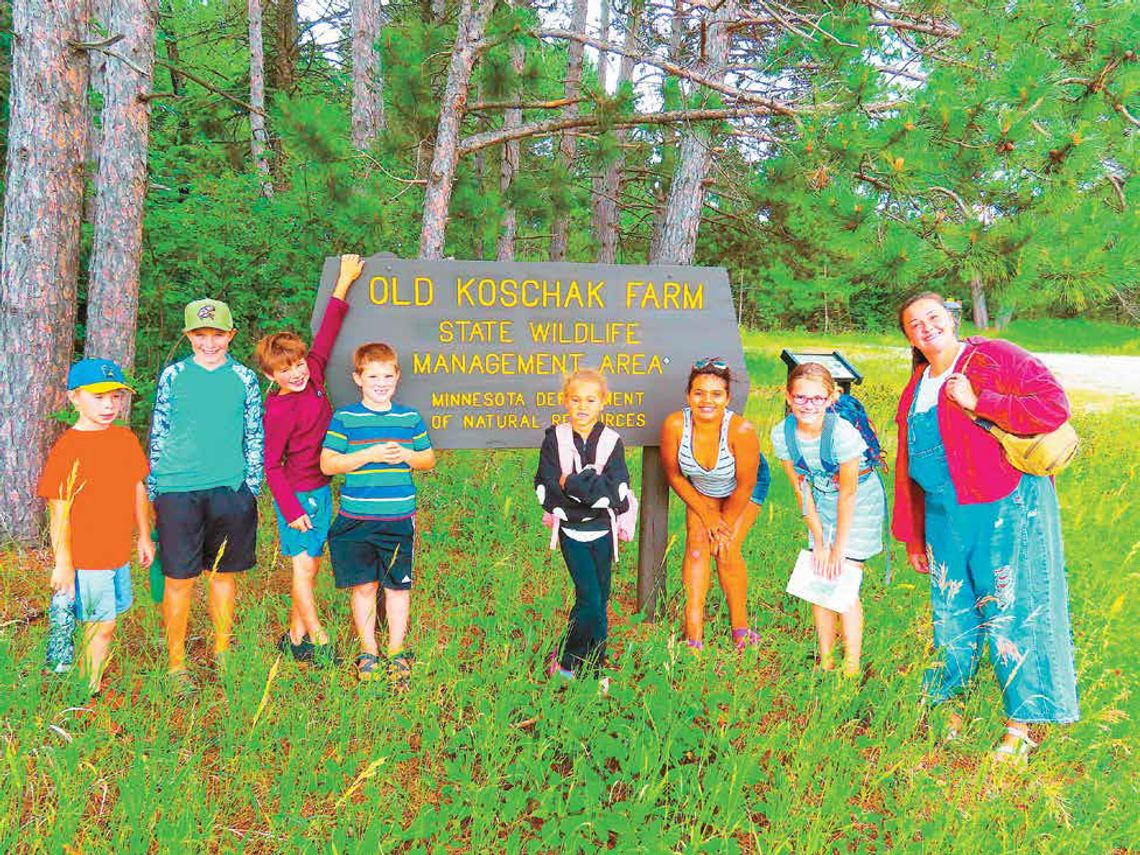
Air quality severity has dropped along with lower temperatures. Midday and the Ely Rec Center “Nature Explorers” take off to the Old Koschak Farm Wildlife Management Area for an outing on the walking trails. A light breeze plays its role in reducing the deer fly, mosquito and other biting insect encounters.
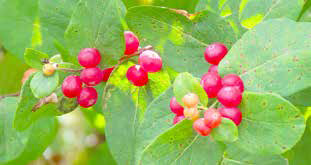
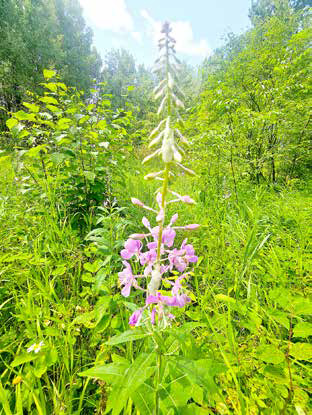
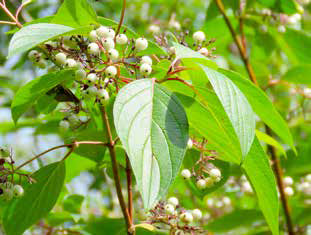
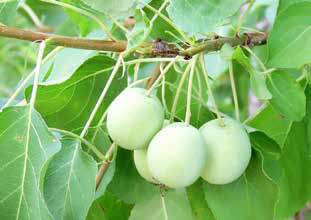
Although not an area known for its wild blueberries, by the end of July, herbaceous and woody plants provide opportunities to meet both edible and inedible fruits. Juneberries and raspberries may not be abundant, but some spots offer a few for the eating. Pin cherries and wild plums have fruit that hasn’t ripened and may provide some future picking. Buckthorn, baneberries, and highbush honeysuckles should be recognized as not edible by humans at least.
The trails are on dikes that surrounded ponds when this was the area fish and wildlife offices before the current offices were built in Tower. Water pumped from Shagawa Lake was used to rear walleyes in the ponds. The area continues to provide habitat for a wide variety of plants and animals.
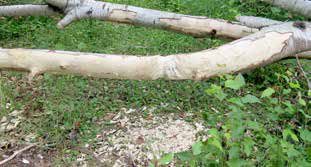
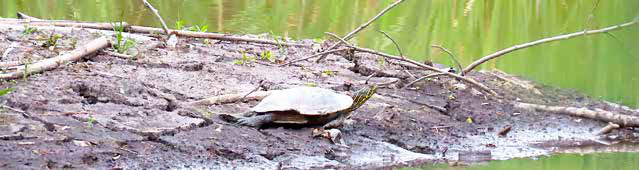
Season to season, this is a great place for a walk, and most years the hunter walking trails get mowed. This hike resulted in more than fruit and flowers. The remaining ponds, surrounded in some places by a forest of large aspens and smaller trees, have become home to mammals. The most obvious activity has been tree felling by beavers. The downed trees didn’t slow down our explorers as we roamed the ponds, and the stone fence area that has changed from field to forest.
The hour and a half of exploring just demonstrated the potential with more time spent through the seasons. Just don’t get too close to the large ant hills. If you invade their space without proper protection, they will bite. But what they build supports a lot of protein that could go with the berries being harvested by bears that might be out and about during the nighttime hours.