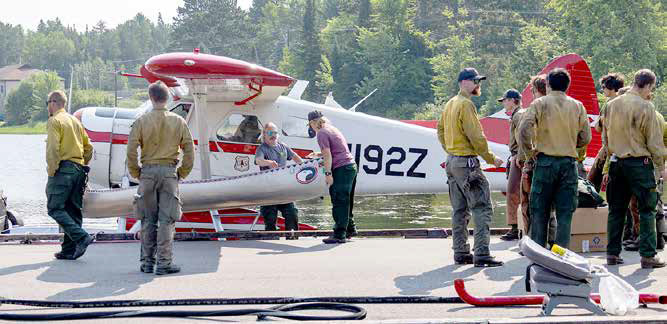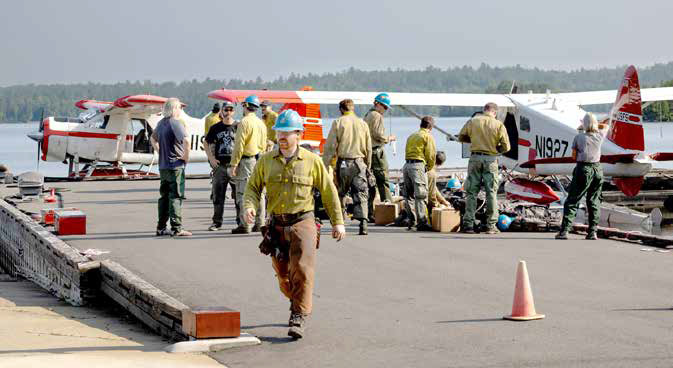
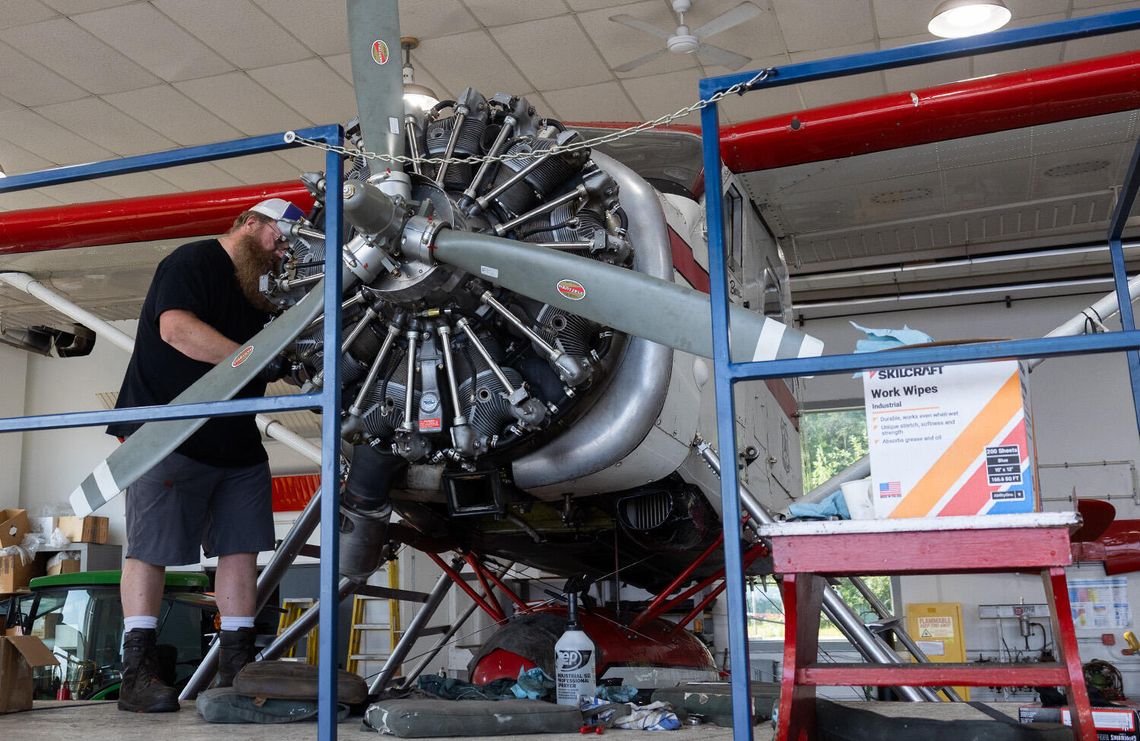
The seaplane base on Shagawa Lake is an airplane hangar unlike any other in the nation.
The base hosts three of just six USFS-owned de Havilland DHC-2 Beaver planes nationwide. The other three Beavers operate out of Alaska.
“Every lake’s an airport, and without roads and all that, seaplanes are the best thing,” said Ely seaplane mechanic Tim Olsen.
Besides Alaska, there are no other roadless regions in the United States that match the scale of northern Minnesota’s vast lakes, peatlands and boreal wilderness — all of which pose challenges to standard aircraft.
Olsen said the USFS bought Ely’s first Beaver seaplane, named 191-Zulu, brand new in 1956 and purchased 192-Zulu in 1959. The 193-Zulu plane retired as a military aircraft and came to the Ely Seaplane Base in 1967.
These planes enable key USFS operations within the Superior National Forest, allowing forest personnel to conduct medical evacuations in the Boundary Waters, seed trees, conduct wildlife telemetry, detect fire, enforce laws and even stock fish in regional lakes via a fish stocking tank.
Skis replace the planes’ floats in winter, allowing them to take off and land on the ice.
The Beavers stay in Ely 90% of the time, Olsen said, and head to the Mark Twain National Forest in Missouri for work every spring.
This month, the base has served as a hub for elite hotshot crews flying out to remote areas to battle July Lightning Event wildfires. Teams fly out in pairs, carrying canoes on the plane for backcountry transportation.
Ely’s seaplanes have contributed to reconnaissance efforts on the July fires, as well as search and rescue missions.
In a typical year, the planes may be mobilized to extinguish one or two smaller fires using their 125-gallon water holding tanks.
“We try to find (fire) small and keep it small. As they grow, 125 gallons does start to become less effective, and that’s where we would call in the larger-capacity water- dropping aircraft,” said Ely Seaplane Base supervisory pilot Jeremy Harmon.
Harmon said the July Lightning Event fires have been the largest he has flown on.
The recent burns have required an additional set of aviation resources, including three different types of helicopters, large CL-415 scooper aircraft, large air tankers, Type Three Fire Boss airtankers and a number of drones.
These planes have collectively dropped over three million gallons of water on the fires, representing 624 total flight hours.
“The way this area is, the ground itself actually burns,” said John Fish, Air Operations Branch Director for the July Lightning Incident.
With flames two to three feet deep under peat and duff in some locations, infrared heat sensors become a necessity.
Helicopters and drones have contributed to aerial imaging and heat signature mapping, providing information to firefighters who can then head out into the backcountry to address hotspots.
“These are very unique tools. They provide us a lot of abilities to do things that ground resources can’t,” said Shane Sturgill, Operations Section Chief of the July Lightning Incident.
Fish said the firefighting efforts have turned a corner as the wildfires approach 50% containment regionwide.
Some air resources have shifted to large wildfires in the Western United States as progress continues in northern Minnesota.
The Southern Area Complex Incident Management Team is set to hand over command of firefighting operations to the Eastern Area Complex Incident Management Team within two to three weeks.