Local fire departments will receive a solid payout for structural protection efforts on the July Lightning Event wildfires through United States Forest Service (USFS) wildland firefighting contracts.
Babbitt billed out around $129,000 for their contributions, while Ely Fire Department has earned $52,000. Morse-Fall Lake Fire Department has submitted $278,053 in reimbursements to the DNR, as of a town board meeting last Tuesday.
“All in all, it’s a huge win,” said Babbitt Fire Chief Tony Chamberlin.
Morse-Fall Lake Fire Department secretary Anna Krueger said their work on the fire is still ongoing and has been since the very beginning — including a period when their fire hall was used as the incident command center, prior to the Ely Memorial High School.
Compensation is administered through the state, but funds flow from the federal level through cooperative fire protection agreements. Departments receive hourly pay based on the types of trucks they send out and the number of hours those engines log on the fire.
Morse-Fall Lake Fire Chief Ted Krueger said up to 27 local fire departments were on the wildfires doing structure protection and support of fire line operations with water delivery filling drop tanks up the Cloquet Line and the Echo Trail.
“They also did structure assessments including the ability to get in and out of people’s properties to see what properties could be saved. About 60 to 70 percent were written off due to the access to the property with narrow driveways or a lack of defensible space around the buildings,” said Ted Krueger.
“We look at it if something were to come through what were we going to do in there. We used ribbons on fire numbers. A pink or red were for a non-defendable property, a yellow ribbon was defendable with some effort and green was defendable with minimal effort,” said Ted Krueger.
Though the revenue numbers look large, Morse-Fall Lake Fire Chief Ted Krueger said a key purpose of the funds is to reimburse departments for the wear-and-tear on their equipment brought on by wildland firefighting.
Ted Krueger said fire trucks have a projected life span of just 20 years, meaning many departments must keep an ongoing savings fund for repairs and truck purchases.
“And, a new truck is now $1.1 million that was $525,000 in 2016,” said Krueger. “Truck costs have basically doubled.”
Ted Krueger served as the lead chief when the fires started, working with the Forest Service to determine what resources were needed.
“Because three of the five fires were in our protection area I had to coordinated with the Forest Service and then with the Incident Management Team to make sure the activities on their fires looked out for the residents of the area.
“That involved visiting the sites of where the fire work was being done and getting on aviation updates and being the go-between for the fire management team and our local fire department operation. If there were questions from supervisors we had the best information to share with the community.
“On that Monday (July 13) I got a phone call from the Forest Service saying you have seen what is going on, we need to work a plan right away. The Forest Service wanted a lot of equipment here in the morning. I sat down with the Fire Management Officer and we hashed out a list of resources he would need,” said Ted Kreuger.
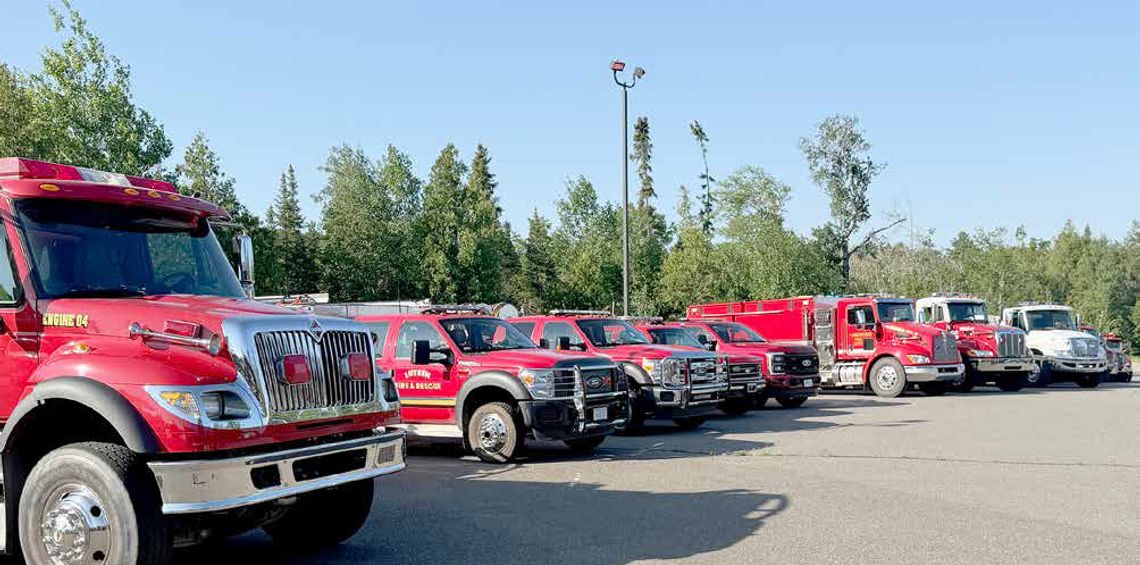
On Tuesday morning, the parking lot at the Morse-Fall Lake fire hall on Hwy. 88 was packed with fire trucks from northeast Minnesota.
Departments that responded included Hibbing, Morse-Fall Lake, Eagles Nest, Ely, Hoyt Lakes, Biwabik, Lakeland, Gilbert, Lutsen, Nashwauk, Orr, Clinton, Mt. Iron, Babbitt, Rice Lake, Palo, Colvin, Deer River, Fayal, Greenwood, Breitung, Cherry, Clifton, Cook, Gnesen, Grand Lake, Proctor, Lakewood, Culver, Aurora, Fredenberg, Duluth, Pike-Sandy-Britt and Normanna.
“I also worked with the state Fire Marshal’s office and started the statewide mutual aid agreement which involved getting our regional fire departments and got a list of equipment and that they had to be there by 8 a.m. the next morning. We had a list of 10 brush trucks, six structure trucks and 10 water tenders that came rolling in,” said Ted Krueger.
Staff from the Morse-Fall Lake Department invested a total of 2,250 working hours during the first two weeks of the fire, said department secretary Anna Krueger.
Babbitt and Ely will compensate firefighters for their time on the July fires as well, amounting to $25,000 and $20,000 of their respective earnings.
Departments will also use these funds for a variety of other purposes, including the purchase of equipment some departments may have been waiting years to purchase.
With over $100,000 remaining in the budget after firefighter payouts, Chamberlin said Babbitt FD will invest in personal protection equipment and a new Type 4 engine the department is building.
With a grant already locked in for $40,000, a truck purchased for $73,000, and plans for in-house wiring, Chamberlin said the new build will total to under $80,000.
Ely Fire Chief Dave Marshall said some of Ely Fire Department’s remaining funds may go into the city’s capital equipment replacement fund, supporting materials for public works, law enforcement and the fire department.
The Ely Fire Department may also invest money in supplies and equipment, which could include chainsaw chains, wildland firefighting turnout gear and more.
The Babbitt Fire Department has sent out three different engines to work on active firefighting around structures off the Echo Trail, Chamberlin said, and also sent trucks to the Camp Fire for structure preparation along the Fernberg Corridor and its joining roads.
Marshall said that the Ely Fire Department was at work on the fires every day that there was local involvement.
Sending trucks is a balancing act for local fire halls, who must also prioritize the needs of their constituents by maintaining coverage of their standard protection area.
“It’s important for chiefs and local elected officials to not look at this and say, we have this great opportunity. We can go make a whole bunch of money,” Marshall said. “But you know who’s paying our bills the rest of the year when there’s not a wildfire is the taxpayers in the city of Ely. We owe it to them to make sure they’re protected before we go out and tackle these other incidents.”
Chamberlin said at a Tuesday council meeting that the Babbitt Fire Department responded to four or five additional calls while some of their trucks were on the fire.
Anna Kr ueger sa id Morse-Fall Lake logged 16 additional fire and EMS calls throughout the timeframe of the wildfires.
“You’re gone 14 hours a day, you come skidding in sideways, you get a little dinner, and you take a nap and get after it right away again in the morning,” Chamberlin said. “So major contributions from everyone involved.”