
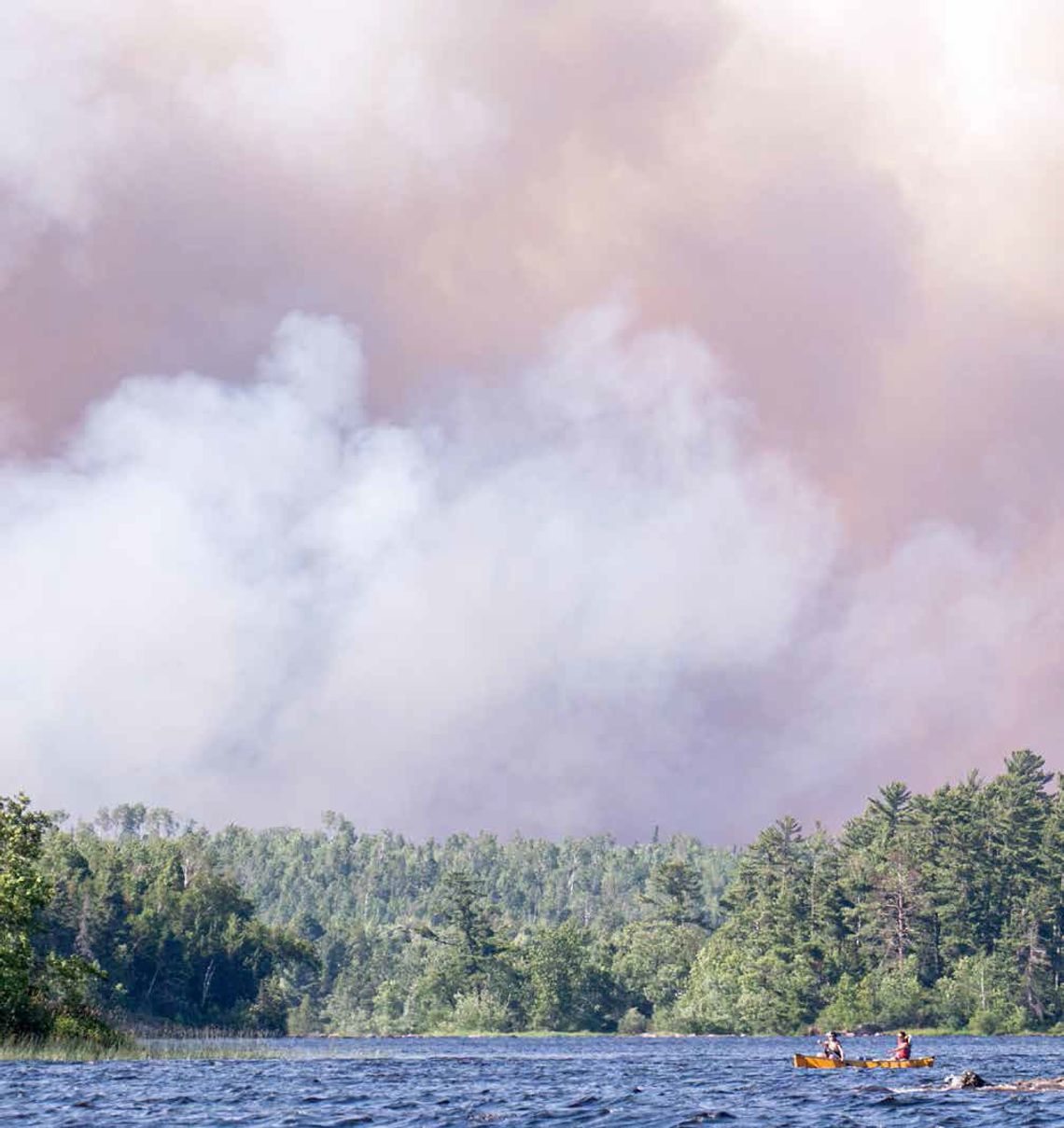
Northern St. Louis and Lake County fires have become the number three priority for national firefighting operations as wildfires ballooned early this week, said USFS Fire Management Officer for the Superior National Forest Nick Petrack.
As of Wednesday morning, 17 wildfires had scorched around 55,000 acres and counting, with minimal rain and continued dry conditions forecasted for coming days.
“We’re getting a lot of attention due to the size of the fires and the potential impact on the communities,” Petrack said.
The wildfires prompted Governor Tim Walz and the Minnesota Executive Council to approve an extension of the state’s peacetime emergency status for 30 days, followed by continued support through the state’s disaster contingency account.
Many of these fires, collectively known as the July Lightning Event Wildfires, sparked due to storms in early July that brought nearly 1,000 lightning strikes to northern Minnesota and southern Ontario forests.
These storms were followed by hot, dry and windy weather with temperatures soaring over 100 degrees in some locations.
“Some of these fires move six to seven miles in a day under those conditions,” said Phillip Manuel, Incident Meteorologist at the National Weather Service.
Petrack said he has seen many fires throughout his 25 years working in the Superior National Forest, but this summer’s incidents are shaping up to be exceptional — especially since they sparked outside of Minnesota’s standard spring fire season.
“I can tell you right now this is probably the most and the largest number of fires I’ve seen in July,” Petrack said.
The fires have scorched into the ground to a depth of two or three feet in some locations, reaching down through layers of conifer needles and peat. Petrack described spotting behavior ahead of the fires brought on by flames in tree crowns, which is a signal of the fires’ intensity.
Manuel said these wildfires could continue to smoke and burn in some capacity until the snow arrives.
“It takes rain with a name to put out big fires,” Manuel said.
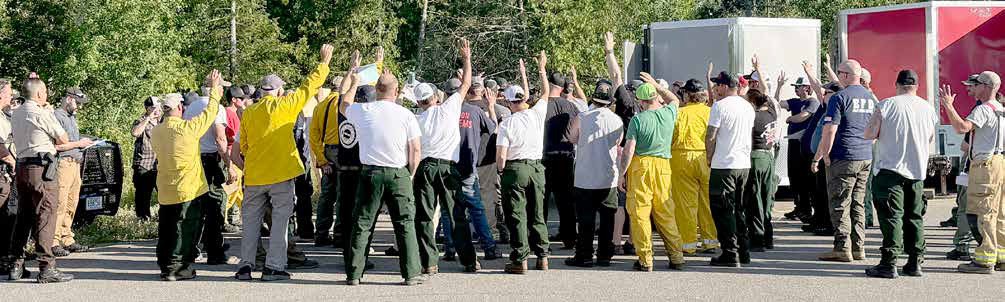
Petrack said resources are prepared for the long haul and expects teams to be managing fire incidents into September. He estimated about 400 or 500 firefighters were on the ground as of Wednesday afternoon, with additional teams on the way from across the country.
Minnesota DNR commissioner Sarah Strommen said state and federal resources have been working in close coordination with Canadian authorities to manage cross-border fires.
The Camp Fire measured in at approximately 4,175 acres as of Thursday morning, as compared to its size of just 1.06 acres last Thursday, July 9.
The fire prompted evacuation orders along Fall Lake and the Fernberg Corridor, resulting in the road’s closure from the Garden Lake bridge onward. Lake County Sheriff Nathan Stadler said the state patrol and other officers went door-to-door earlier this week to ensure everyone had left the area.
The Sioux Fire merged with the Wolfpack Fire and brought evacuation orders on the Echo Trail north of First Lake Road all the way to Forest Road 200 near the Crane Lake area.
To the north, the Bear Trap Fire merged with the Dark Fire and had burned about 13,500 acres north of Sunday Lake as of Thursday evening. At approximately that same time, the Thumb Fire had expanded to around 14,500 acres near Lac La Croix.
The Little Knife Fire sparked west of the Gunflint Trail on Tuesday night, arriving from Ontario. Its total area measured about 28,000 acres as of Wednesday afternoon, with around 6,000 in Minnesota.
“These fires continue to grow at significant rates,” said St. Louis County Sheriff Gordon Ramsay. “With the current winds, we’re concerned that they will continue to expand potentially in populated areas.”
Stadler reminded the public to keep an eye on alerts and heed evacuation warnings.
“As a property owner in the United States, I’m not going to make you go,” Stadler said. “I’m going to tell you and strongly suggest you need to go for these reasons, but if you choose to stay, once we’ve gone through there there’s no guarantee we’re going to come back and look for you again.”
Petrack said the knowledge that someone has decided to stay in their home despite evacuation warnings can bring additional stress to firefighting teams.
“Of the utmost concern is people’s safety,” Ramsay said.
Justin Randall of the National Incident Management Organization reminded the public to avoid flying drones over the area following a potential incident with a drone incursion on the restricted airspace.
“Drones and firefighting aircraft do not mix,” Randall said. “If we can’t ensure deconfliction and that we have complete control in an airspace, we have no choice but to have our aircraft return back to base back on the ground until we can do that.”
Petrack recognized the concerns about Boundary Waters closures and community impacts and said authorities continue to monitor the situation to determine courses of action.
“We sincerely realize the impacts it has to the community, along with our firefighters,” Petrack said. “We are doing the best we can.”